
Rock Pipit
Anthus obscurus
Order: Passeriformes / Family: Motacillidae

Wikimedia Commons
About the Rock Pipit
The Rock Pipit, scientifically known as Anthus obscurus, is an intriguing member of the Motacillidae family. This bird, typically found along the rocky coastlines of western Europe, Scandinavia, and the British Isles, plays a significant role in the coastal ecosystems where it resides. The bird's preference for rugged coastal habitats sets it apart from other pipits, and it can often be seen skittering over rocks and tidal pools in search of food.
Its ecological role is multifaceted. Rock Pipits contribute to controlling insect populations along shorelines, playing a part in the food web that supports both terrestrial and marine ecosystems. They are also a vital food source for avian predators such as peregrine falcons and various gull species. During the breeding season, they are largely sedentary, remaining close to their chosen territories to defend them vigorously against intruders. Their presence is a marker of healthy coastal environments, as they require clean, undisturbed habitats to thrive.
Seasonally, Rock Pipits exhibit some fascinating behaviors. They are primarily resident birds but may display altitudinal migration, moving slightly inland or to lower elevations during harsh winter weather. In milder climates, they might only shift their feeding territories slightly, taking advantage of coastal invertebrates and plant seeds that become more accessible during different times of the year. Their adaptability to changing seasons is a testament to their resilience, yet they remain sensitive to environmental changes brought on by coastal development and pollution.
The Rock Pipit belongs to the family Motacillidae, within the order Passeriformes. These birds typically live average 2-3 years with a max recorded of 10 years..
How to Identify a Rock Pipit
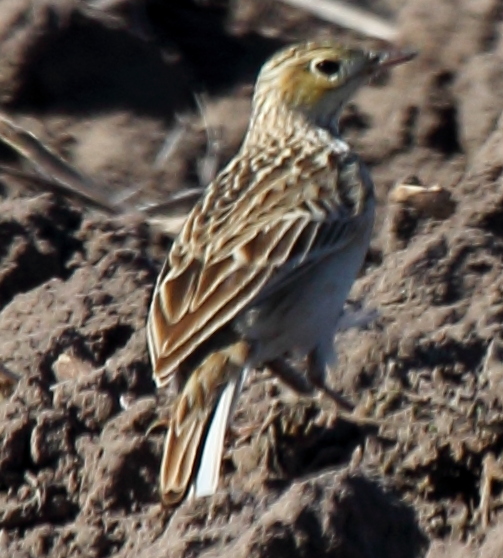
Identifying the Rock Pipit involves noting its medium-sized, robust body and distinct olive-brown upperparts, complemented by dark streaking. The underparts are paler, with a buff or white background and pronounced streaking on the chest and flanks. This bird's legs are dark, and it possesses a thin, pointed bill that aids in its insectivorous diet.
Juvenile Rock Pipits resemble adults but present with slightly more pronounced streaking and a less defined coloration. There is minimal sexual dimorphism, making males and females difficult to distinguish in the field. However, males might exhibit slightly brighter plumage during the breeding season.
Confusion with similar species such as the Meadow Pipit (Anthus pratensis) and Water Pipit (Anthus spinoletta) can occur. The Rock Pipit is typically darker, with a more robust bill and a preference for rocky coastal habitats, as opposed to the more terrestrial leanings of its relatives. In flight, the Rock Pipit's silhouette shows a slightly more rounded wing shape and a characteristic undulating flight pattern.
Having trouble telling birds apart? Upload a photo to our bird identification tool for an instant species match.
Rock Pipit Habitat and Range
Preferred Habitat
Rock Pipits primarily inhabit rocky coastlines, cliffs, and tidal zones, showing a strong preference for areas with abundant barnacles and seaweed. Specific habitats include the rugged coasts of Scotland, Norway, and the western coasts of Ireland and England. They are less common inland, although they can occasionally be found near large freshwater bodies with rocky shores.
These birds are typically seen from sea level up to moderate elevations, often avoiding heavily forested or densely populated urban areas. Seasonal shifts in habitat are minimal, although some populations may move slightly inland during winter months to avoid the harshest coastal conditions. Their reliance on coastal environments makes them sensitive indicators of ecological change in these regions.
Geographic Range
The Rock Pipit breeds along the coastal regions of western Europe, extending from the northern coasts of Spain through France, the British Isles, and into Norway and Iceland. They are primarily resident birds, but populations in the far north, such as those in Scandinavia, may undertake short-distance migrations to more temperate coastal regions during winter.
Wintering ranges remain primarily coastal, with some individuals venturing slightly inland. However, they are largely absent from central Europe and only occasionally recorded on the fringes of the continent. Notable population density hotspots include the coastal cliffs of Wales and the Hebrides in Scotland, where they are a common sight year-round.
Want to know which birds visit your area? Browse our backyard birds by location guides for region-specific species lists.
What Does the Rock Pipit Eat?
The diet of the Rock Pipit consists mainly of invertebrates, including insects, spiders, and small crustaceans found in their coastal habitats. During the breeding season, they intensify their foraging to include a higher proportion of insect larvae and marine invertebrates, providing the necessary nutrition for their growing young.
In winter, their diet diversifies with the inclusion of seeds and small plant matter, as insect availability decreases. Rock Pipits forage by pecking and probing among rocks and seaweed, often seen turning over debris to uncover hidden prey. Their ability to exploit both tidal and terrestrial zones for food allows them to maintain a stable diet throughout the year.
Rock Pipit Behavior and Social Structure
Rock Pipits exhibit distinct social and territorial behaviors. During the breeding season, they are highly territorial, with males performing aerial displays and singing to establish dominance and attract mates. Their song, a series of high-pitched notes, is often delivered from perches or during short flights.
Outside the breeding season, Rock Pipits may form loose flocks, particularly during high tides when feeding areas are underwater. They are diurnal, with peak activity during the morning and late afternoon. In response to predators, they employ a mix of cryptic behavior and rapid flight, often relying on their drab coloration to blend into rocky backgrounds.
Their daily routine involves meticulous grooming and preening to maintain their plumage, crucial for insulation and waterproofing in their coastal habitats.
Rock Pipit Nesting and Reproduction
Rock Pipits prefer to nest in crevices or under rocks, usually close to the shoreline. They build cup-shaped nests using grasses, seaweed, and moss, lined with softer materials like feathers and hair. The nest’s location ensures protection from the elements and predators.
Typically, females lay 3-5 eggs per clutch. The incubation period lasts around 13-14 days, with females primarily responsible for keeping the eggs warm. Once hatched, both parents participate in feeding the chicks, which fledge approximately 14-17 days post-hatching. Rock Pipits usually have one or two broods per year, depending on environmental conditions and food availability.
Rock Pipit Sounds and Vocalizations
The Rock Pipit's song consists of rapid, high-pitched trills and chirps, often rising in intensity and delivered from a prominent perch or during a short, fluttering flight. These vocalizations serve both territorial and mating functions.
Their call notes are sharp and metallic, frequently used to maintain contact with mates or alert others to potential threats. Alarm calls are more intense and repetitive, used when predators are nearby. During the dawn chorus, their song becomes part of a broader symphony of coastal bird calls, adding to the vibrant soundscape of their rocky habitats.
Interesting Facts About the Rock Pipit
- 1Rock Pipits have been known to travel short distances inland during winter, although they primarily remain close to coastal regions.
- 2Their preference for rocky shorelines makes them one of the few pipit species adapted to marine habitats.
- 3Rock Pipits are adept at navigating rocky terrains, using their strong legs and sharp eyesight to forage efficiently.
- 4The species was first described in 1798 by Johann Friedrich Gmelin, a German naturalist.
- 5During courtship, male Rock Pipits perform display flights, singing as they ascend and glide down with wings outstretched.
- 6Rock Pipits often use the same nesting sites year after year, showcasing strong site fidelity.
- 7They can live up to 5 years in the wild, with their longevity largely dependent on environmental conditions.
Rock Pipit Conservation Status
Currently, the Rock Pipit is listed as Least Concern by the IUCN due to its stable population trend. However, certain coastal developments and pollution pose potential threats to their habitats. Efforts to conserve coastal ecosystems indirectly benefit the Rock Pipit, ensuring the preservation of their nesting and feeding areas. Historically, the population has remained relatively stable, with minor fluctuations linked to severe weather events and habitat changes. Conservationists continue to monitor coastal areas to mitigate any adverse effects from human activity and climate change.
Other Motacillidae Species



Birds Similar to the Rock Pipit
These species are often confused with the Rock Pipit due to similar appearance or overlapping range.

