
Water Pipit
Anthus spinoletta
Order: Passeriformes / Family: Motacillidae

Wikimedia Commons
About the Water Pipit
The Water Pipit, Anthus spinoletta, is a fascinating songbird that inhabits a variety of high-altitude and temperate regions across Europe and Asia. This species is particularly significant due to its adaptability to different environments and its role in alpine ecosystems. Water Pipits primarily breed in mountainous areas, often above 1,500 meters, where they contribute to the delicate balance of these ecosystems by preying on insects and other small invertebrates. During the breeding season, they can be found in the Alps, the Pyrenees, and the Carpathians, favoring open habitats with sparse vegetation, rocky outcrops, and proximity to water sources. Their ecological role extends beyond simple insect control; they serve as indicators of environmental health in these high-altitude regions as their presence and population dynamics reflect the impacts of climate change and human activities on these fragile ecosystems. As autumn approaches, Water Pipits migrate to lower altitudes and more temperate climates, shifting to areas with milder winters to continue their survival. These migration patterns underscore their adaptability. Wintering populations can be found in southern Europe, North Africa, and parts of the Middle East. Throughout the year, Water Pipits adjust their diet and behavior to match the seasonal availability of food and the changing conditions of their habitats, evidencing their resilience and flexibility.
The Water Pipit belongs to the family Motacillidae, within the order Passeriformes. These birds typically live average 3-5 years, with a maximum recorded of 8 years..
How to Identify a Water Pipit
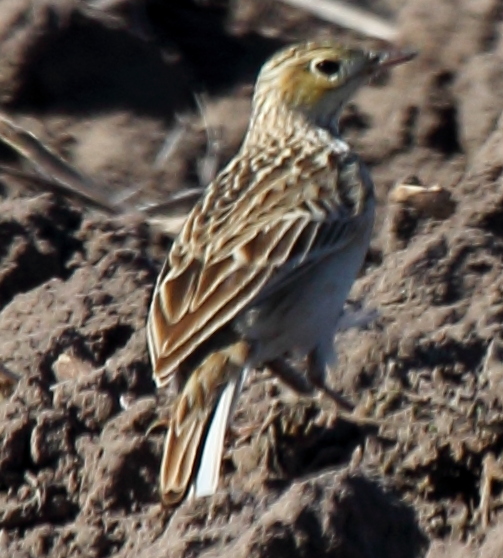
The adult Water Pipit displays a subtle yet distinctive plumage with predominantly brown upperparts and paler underparts, including a buffish-white belly. Their plumage provides excellent camouflage against the rocky and grassy terrains they inhabit. In the breeding season, a faint pinkish-buff wash can be observed on the breast, enhancing their otherwise understated appearance. Juvenile Water Pipits are similar to adults but exhibit more streaked and mottled plumage, particularly on the breast and flanks, which aids in differentiation from the mature birds. Both male and female Water Pipits appear similar, with males possibly displaying slightly more vibrant coloration during the breeding season. Compared to similar species such as the Meadow Pipit, the Water Pipit is larger and more robust with a less pronounced streaking on the underparts. In flight, Water Pipits show a distinctively undulating pattern, often accompanied by their characteristic flight call. When perched, they stand upright with their tail slightly cocked, which is a typical posture among pipits. Their long hind claw is also a useful field mark, aiding in their identification.
Having trouble telling birds apart? Upload a photo to our bird identification tool for an instant species match.
Water Pipit Habitat and Range
Preferred Habitat
Water Pipits inhabit high-altitude and open landscapes, primarily above 1,500 meters in regions such as the European Alps, Pyrenees, and the mountains of Central Asia. These terrains provide a mix of grasslands, rocky outcrops, and proximity to water bodies, fulfilling the species' requirements for nesting and feeding. During the breeding season, they prefer alpine meadows and pastures, where sparse vegetation offers both concealment and access to prey. In winter, Water Pipits migrate to lower altitudes, favoring milder climates in southern Europe, North Africa, and parts of the Middle East. Here, they can be found in wetlands, agricultural fields, and grassy plains, adapting to the available habitats. Although primarily associated with rural and natural settings, Water Pipits occasionally venture into urban outskirts during migration, exploiting parklands and open fields within city limits.
Geographic Range
The breeding range of the Water Pipit extends across the mountainous regions of Europe and into parts of Central Asia. Notably, they occupy the Alps, Pyrenees, and Carpathians, with populations also found in the Caucasus and the Tian Shan ranges. During the non-breeding season, Water Pipits migrate to southern and western Europe, North Africa, and the Middle East, with some reaching as far east as Iran. Migration corridors include the valleys and lowlands that provide safe passage between breeding and wintering grounds. Population density hotspots during the breeding season are found in the alpine regions where suitable habitats are concentrated. In winter, they disperse more widely across their range, utilizing a variety of lower elevation habitats.
Want to know which birds visit your area? Browse our backyard birds by location guides for region-specific species lists.
What Does the Water Pipit Eat?
The diet of the Water Pipit primarily consists of insects and other small invertebrates, which they actively forage for in their open and often sparse environments. During the breeding season, they focus on abundant alpine insects such as beetles, flies, and caterpillars. This diet provides the necessary nutrients to support their energy-intensive activities and the nourishment of their young. As they migrate and settle into wintering areas, their diet diversifies to include seeds and plant material, especially when insect prey becomes scarce. Water Pipits employ a variety of foraging techniques, from walking and pecking on the ground to short, aerial sallies to catch flying insects. Their feeding schedule is diurnal, with peak activity occurring in the early morning and late afternoon.
Water Pipit Behavior and Social Structure
Water Pipits exhibit a complex blend of territorial and social behaviors, particularly during the breeding season when males establish and defend territories through song and display flights. These displays include a characteristic hovering flight, often accompanied by melodic calls, designed to attract females and deter rivals. Outside the breeding season, Water Pipits are more gregarious, forming loose flocks as they migrate or forage in winter habitats. Their flocking behavior provides safety in numbers against predators. Daily activity patterns are largely diurnal, with foraging, social interactions, and territorial displays occurring primarily during daylight hours. At night, they roost in sheltered locations to conserve warmth and energy. Water Pipits respond to predators with alarm calls and evasive maneuvers, relying on their cryptic plumage for concealment.
Water Pipit Nesting and Reproduction
Water Pipits construct cup-shaped nests on the ground, typically concealed among rocks or in dense vegetation to provide protection from predators and harsh weather. The nests are made from grasses, mosses, and other plant materials, lined with finer materials such as hair or feathers for insulation. The female typically lays 4-6 eggs per clutch, with an incubation period of about 14 days, primarily undertaken by the female. Both parents participate in feeding the nestlings, which fledge approximately 14-16 days after hatching. Water Pipits generally produce one brood per year, although in favorable conditions, a second brood may be attempted.
Water Pipit Sounds and Vocalizations
The primary song of the Water Pipit is a series of melodious, high-pitched phrases delivered in a rolling, fluid manner. This song is most often heard during the breeding season when males sing from elevated perches or during display flights. Their calls include short, sharp 'tsip' notes used for communication within flocks or as alarm signals. Alarm calls are more rapid and insistent, alerting others to potential threats. During the dawn chorus, Water Pipits contribute with their distinctive songs, adding to the symphony of sounds in their alpine habitats.
Interesting Facts About the Water Pipit
- 1Water Pipits can breed at elevations as high as 2,500 meters, taking advantage of alpine conditions.
- 2The Water Pipit's camouflage is so effective that it can be nearly invisible among rocks and sparse vegetation.
- 3During migration, Water Pipits can travel over 1,000 kilometers to reach their wintering grounds.
- 4Water Pipits are known for their adaptability, utilizing a wide range of habitats across their migratory path.
- 5The species' song is often likened to that of the Skylark, though it is delivered with a more subdued quality.
- 6Water Pipits can adjust their diet seasonally, demonstrating remarkable flexibility in response to food availability.
- 7The Water Pipit's display flight during courtship is a striking behavior, showcasing their agility and vocal prowess.
Water Pipit Conservation Status
The Water Pipit is currently listed as Least Concern by the IUCN, with a stable population trend across its range. While the species faces threats from habitat loss due to climate change and human encroachment, its adaptability to different environments helps mitigate these impacts. Conservation efforts focus on preserving high-altitude habitats and monitoring population trends to ensure their continued stability. Historically, the Water Pipit's range and population have remained relatively stable, though localized declines may occur in areas heavily impacted by environmental changes.
Other Motacillidae Species



Birds Similar to the Water Pipit
These species are often confused with the Water Pipit due to similar appearance or overlapping range.

