
Black-whiskered Vireo
Vireo altiloquus
Order: Passeriformes / Family: Vireonidae

Wikimedia Commons
About the Black-whiskered Vireo
The Black-whiskered Vireo, scientifically known as Vireo altiloquus, is a small passerine bird belonging to the family Vireonidae. This bird is an integral part of the ecosystems in which it resides, particularly in the Caribbean and parts of southern Florida. It plays a vital role in controlling insect populations and facilitating seed dispersal, making it crucial for the ecological balance of its habitats. Black-whiskered Vireos are primarily found in subtropical and tropical regions, where they inhabit a variety of wooded areas, such as mangroves, coastal forests, and scrublands. They are particularly associated with the mangrove forests of the Bahamas and Cuba, as well as the southern tip of Florida, including the Everglades. During the breeding season, these vireos establish territories in these dense, semi-open woodlands, where they construct their nests and rear their young. The Black-whiskered Vireo is a migratory species, with populations breeding in the Caribbean and parts of Florida before migrating to northern South America for the winter. This seasonal movement is critical for the bird's life cycle, as it allows them to exploit different habitats and resources throughout the year. During migration, they are often observed in coastal areas, where they stop to refuel and rest. The Black-whiskered Vireo's ecological role extends beyond mere insect control and seed dispersal. They are also indicators of environmental health due to their sensitivity to changes in habitat quality and food availability. Consequently, the presence or absence of these vireos can signal shifts in ecological conditions, making them valuable subjects for scientific study.
The Black-whiskered Vireo belongs to the family Vireonidae, within the order Passeriformes. These birds typically live average lifespan of 5 years with a maximum recorded of 9 years..
How to Identify a Black-whiskered Vireo
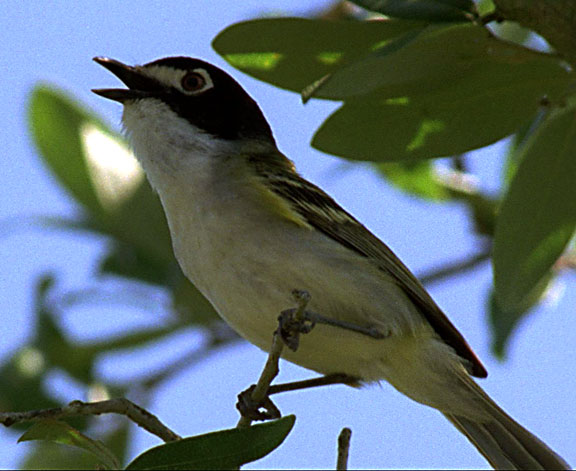
Adult Black-whiskered Vireos are medium-sized songbirds with an overall olive-green plumage. Their distinctive black whisker mark, which extends from the base of the bill down the throat, serves as a key identifying feature. The top of their head is gray, contrasting with a white supercilium that runs above the eye. Juvenile birds resemble adults but often exhibit duller plumage and less distinct facial markings. Males and females look alike, making them difficult to distinguish by sight alone. The Black-whiskered Vireo can be confused with the Red-eyed Vireo, another member of the Vireonidae family. However, the Red-eyed Vireo lacks the black whisker mark and has a more pronounced red eye, whereas the Black-whiskered Vireo's eye is brownish-red. In flight, the Black-whiskered Vireo displays a relatively short, rounded tail and broad wings, which contribute to its agile movements among tree canopies. When perched, they often exhibit a horizontal posture, blending into the foliage with their subdued coloration.
Having trouble telling birds apart? Upload a photo to our bird identification tool for an instant species match.
Black-whiskered Vireo Habitat and Range
Preferred Habitat
The Black-whiskered Vireo occupies a variety of habitats, primarily favoring subtropical and tropical woodlands. They thrive in mangrove forests, coastal forests, and scrublands across their range. For example, in the Everglades National Park, they are frequently found in mangrove swamps and along forest edges. These birds prefer lowland areas but can occasionally be spotted in higher elevations during migration. They are adaptable and can sometimes be found in urban areas with sufficient tree cover, though they are more commonly associated with rural settings. Seasonal habitat shifts occur as they migrate from breeding grounds in the Caribbean and southern Florida to wintering locations in northern South America. During migration, they tend to congregate in coastal areas, utilizing forests and thickets as stopover sites.
Geographic Range
The Black-whiskered Vireo's breeding range extends throughout the Caribbean, including islands such as Cuba, the Bahamas, and Puerto Rico. In the continental United States, they breed in southern Florida, particularly the Everglades and Florida Keys. Their wintering range encompasses northern South America, with large populations found in Venezuela, Colombia, and the Guianas. Migration corridors typically follow coastal routes, allowing these birds to traverse large distances efficiently. During migration, they can be observed along the Gulf Coast and in parts of Central America. Population density is highest in the Caribbean, where suitable breeding habitats are abundant. In the United States, they are less common and primarily restricted to the extreme southern regions.
Want to know which birds visit your area? Browse our backyard birds by location guides for region-specific species lists.
What Does the Black-whiskered Vireo Eat?
The Black-whiskered Vireo primarily feeds on insects and other invertebrates, such as caterpillars, beetles, and spiders. They are adept foragers, gleaning prey from leaves, branches, and bark. During the breeding season, their diet consists mainly of protein-rich insects to support chick development. In addition to invertebrates, they consume fruits and berries, particularly during migration and in winter. These dietary shifts allow them to take advantage of available food resources across different habitats and seasons. The Black-whiskered Vireo's foraging behavior is characterized by deliberate movements through foliage, often accompanied by short flights to capture prey. They feed throughout the day, with peak activity occurring in the early morning and late afternoon.
Black-whiskered Vireo Behavior and Social Structure
Black-whiskered Vireos exhibit solitary to loosely social behavior, especially during the breeding season when they establish and defend territories. Males sing persistently to proclaim territory and attract females, often engaging in vocal contests with rivals. Courtship involves males performing display flights and feeding potential mates. Outside the breeding season, their social structure becomes more flexible. During migration, they may join mixed-species flocks, benefiting from the protection and foraging efficiency these groups offer. Their response to predators includes alarm calling and mobbing behavior, particularly when nests are threatened. Daily activity patterns include periods of foraging interspersed with rest and preening.
Black-whiskered Vireo Nesting and Reproduction
The Black-whiskered Vireo constructs a cup-shaped nest made from twigs, grass, and spider silk, often placed in the fork of a tree branch. Preferred nesting locations are in dense foliage, providing concealment from predators. The female typically lays 2-4 eggs per clutch, which she incubates for about 12-14 days. Both parents participate in feeding the nestlings, which fledge approximately 10-12 days after hatching. The species often raises two broods per year, taking advantage of extended breeding seasons in tropical climates. Parental roles are well-defined, with both adults contributing to nest building, incubation, and chick rearing.
Black-whiskered Vireo Sounds and Vocalizations
The primary song of the Black-whiskered Vireo is a series of short, melodic phrases repeated persistently throughout the day. It can be described as a rhythmic, sweet series of notes with a conversational quality. In addition to their song, they produce various call notes, including harsh scolds and alarm calls used to warn of predators. During the dawn chorus, their singing is most vigorous, contributing to the symphony of sounds in their habitat. Comparatively, their song shares similarities with the Red-eyed Vireo, but the Black-whiskered's song is typically lower-pitched and slower.
Interesting Facts About the Black-whiskered Vireo
- 1The Black-whiskered Vireo can sing up to 20,000 songs per day, showcasing its persistent vocal nature.
- 2This vireo's migration spans thousands of miles, from the Caribbean to northern South America.
- 3Their nests are often suspended from the forks of branches, providing stability and camouflage.
- 4The species was first described scientifically in 1760 by French naturalist Mathurin Jacques Brisson.
- 5Black-whiskered Vireos are known to join mixed-species flocks during migration, enhancing foraging success.
- 6These birds are closely related to the Red-eyed Vireo, but are distinguishable by their unique facial markings.
- 7Their song is often compared to a repetitive series of questions and answers, contributing to their conversational call.
Black-whiskered Vireo Conservation Status
The Black-whiskered Vireo is currently classified as Least Concern by the IUCN, with stable population trends across much of its range. However, habitat loss due to deforestation and coastal development poses ongoing threats. Conservation efforts focus on habitat preservation, particularly in key breeding areas like the mangroves of the Caribbean and Florida. Historical population changes have been influenced by land use changes, but current measures aim to mitigate these impacts. Continued monitoring and habitat protection are essential to ensure the species' long-term survival.
Other Vireonidae Species
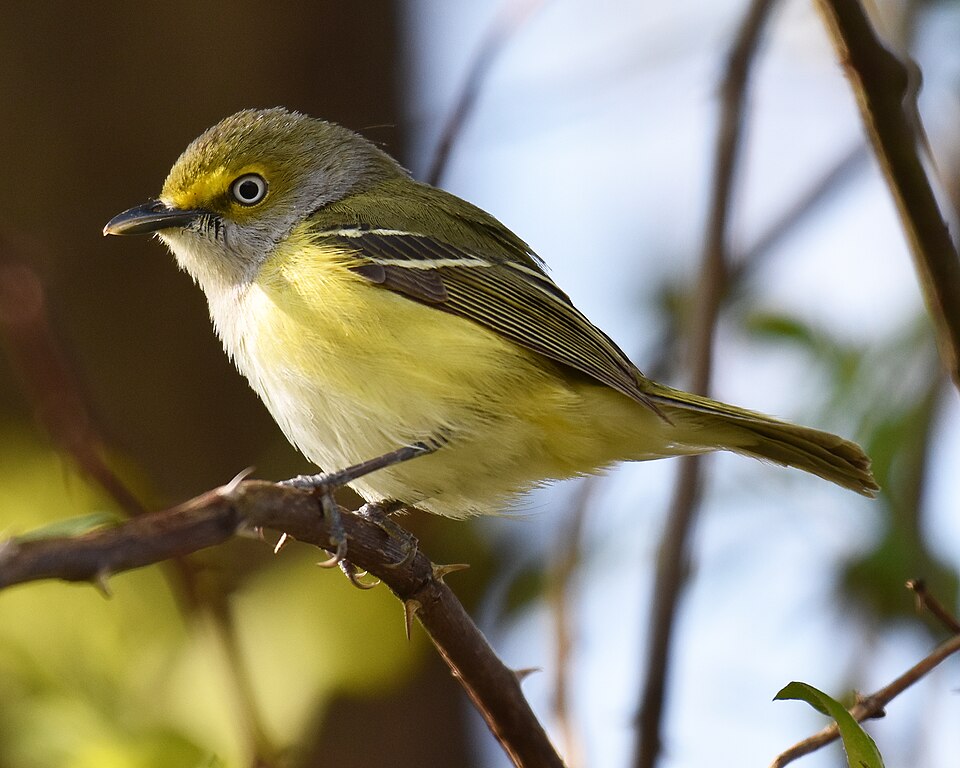


Birds Similar to the Black-whiskered Vireo
These species are often confused with the Black-whiskered Vireo due to similar appearance or overlapping range.

