
Brown-headed Greenlet
Hylophilus brunneiceps
Order: Passeriformes / Family: Vireonidae

Wikimedia Commons
About the Brown-headed Greenlet
The Brown-headed Greenlet (Hylophilus brunneiceps) is a small, yet significant member of the Vireonidae family, often found flitting through the dense canopies of South America's tropical forests. This avian species plays a crucial ecological role as both a consumer of insects and a disperser of seeds, thereby contributing to the health and regeneration of its native habitats. Notably, the Brown-headed Greenlet is primarily resident in countries like Brazil, Colombia, and Venezuela, where it inhabits lowland to montane forest ecosystems up to elevations of 1,500 meters. During the wet season, this bird's presence becomes more pronounced as it actively participates in the ecosystem's dynamic interplay, foraging extensively and engaging in breeding activities. The Brown-headed Greenlet is also known for its subtle yet continuous vocalizations, which serve as a backdrop to the vibrant sounds of the forest. As a key component of its ecosystem, the Brown-headed Greenlet influences the population dynamics of insect prey and the distribution of plant species through seed dispersal. Its ability to adapt to secondary growth and fragmented habitats makes it a resilient species, though it remains sensitive to large-scale deforestation and habitat degradation. Observing the Brown-headed Greenlet in its natural setting offers insight into the complex interactions within tropical forest ecosystems and underscores the importance of preserving these habitats. The bird's seasonal behaviors, including its breeding and foraging patterns, align with the cyclical nature of tropical climates, emphasizing its role in maintaining ecological balance. As a species that thrives in the understory and mid-canopy layers, the Brown-headed Greenlet exemplifies the intricate relationships that define tropical biodiversity.
The Brown-headed Greenlet belongs to the family Vireonidae, within the order Passeriformes. These birds typically live typically 5-7 years, with some individuals living up to 10 years..
How to Identify a Brown-headed Greenlet
The adult Brown-headed Greenlet is characterized by a rich chestnut-brown head, which contrasts with its olive-green back, wings, and tail. Its underparts are a pale yellow, providing a striking contrast to the darker tones of its upper body. Juvenile Brown-headed Greenlets exhibit a duller coloration, with less pronounced brown on the head and a more muted yellow on the underparts. Males and females are similar in appearance, though males may have slightly brighter plumage. In the field, this bird can be distinguished from other similar species by its unique combination of brown and green plumage. For instance, it can be confused with some species of foliage-gleaners or other vireos, but the distinct brown head of the Brown-headed Greenlet is a reliable identifying mark. Its flight silhouette is typical of small passerines, with a relatively short tail and rounded wings, while its perching posture often involves a slight forward lean as it actively scans for insects. Observers should note the bird's active foraging behavior, which often involves rapid movements and short, fluttery flights between branches.
Having trouble telling birds apart? Upload a photo to our bird identification tool for an instant species match.
Brown-headed Greenlet Habitat and Range
Preferred Habitat
The Brown-headed Greenlet inhabits the tropical and subtropical forests of South America, predominantly in regions like the Amazon Basin. It favors lowland rainforests but is also found in montane forests up to about 1,500 meters in elevation. This bird can adapt to secondary growth and forest edges, provided there is sufficient tree cover. During different seasons, it may shift slightly within its habitat to areas that offer abundant food resources, such as insect-rich forest edges or fruiting trees. While primarily a forest dweller, the Brown-headed Greenlet occasionally ventures into rural and suburban areas that maintain significant tree cover, though it is less commonly found in heavily urbanized environments.
Geographic Range
The Brown-headed Greenlet's range extends across several countries in northern South America, including Brazil, Colombia, Venezuela, and parts of the Guianas. It is a non-migratory species, maintaining a year-round presence within its established range. The bird is typically found in dense, humid forests, with population density being higher in regions where primary forests are intact. Although it does not undergo long-distance migrations, the Brown-headed Greenlet may engage in local movements within its range in response to food availability and habitat conditions. Population hotspots include areas of the Amazon Basin and the subtropical forests of the Andean foothills.
Want to know which birds visit your area? Browse our backyard birds by location guides for region-specific species lists.
What Does the Brown-headed Greenlet Eat?
The diet of the Brown-headed Greenlet primarily consists of insects and other small arthropods, which it actively forages for among the foliage of trees and shrubs. It employs a gleaning technique, picking prey items from leaves and branches with precision. During the wet season, when insect populations are abundant, the Brown-headed Greenlet's diet is dominated by caterpillars, beetles, and spiders. In drier periods, it may supplement its diet with small fruits and berries, contributing to seed dispersal in its habitat. This bird typically feeds throughout the day, with peak activity occurring in the early morning and late afternoon when insect activity is highest. The Brown-headed Greenlet's foraging strategy involves both solitary and small group feeding, depending on the abundance of food resources.
Brown-headed Greenlet Behavior and Social Structure
The Brown-headed Greenlet exhibits a range of social and territorial behaviors, often observed in small family groups or pairs. During the breeding season, which coincides with the wet season, males engage in vocal displays to establish territory and attract mates. These displays involve a series of soft, melodic calls that can be heard throughout the forest canopy. The species is generally non-aggressive, though it will defend its territory against intruding conspecifics and other small birds. Flocking behavior is more common outside the breeding season, where the Brown-headed Greenlet may join mixed-species foraging flocks to exploit food resources efficiently. In response to predators, it relies on its agile flight and dense foliage cover to evade capture. The Brown-headed Greenlet's daily activity pattern includes periods of intense foraging interspersed with rest during the hottest parts of the day.
Brown-headed Greenlet Nesting and Reproduction
The Brown-headed Greenlet constructs a small, cup-shaped nest typically situated in the fork of a branch or within dense foliage to provide concealment. Nest materials include fine twigs, grasses, and leaves, often bound together with spider silk to create a sturdy structure. The preferred nesting sites are usually located 2 to 5 meters above the ground, within the understory or lower canopy levels. A typical clutch consists of 2 to 3 eggs, which both parents incubate over a period of 12 to 14 days. After hatching, the chicks remain in the nest for approximately 10 to 12 days before fledging. Both parents participate in feeding and caring for the young, ensuring a high rate of survival to fledging. The Brown-headed Greenlet generally raises one to two broods per year, depending on environmental conditions and food availability.
Brown-headed Greenlet Sounds and Vocalizations
The primary song of the Brown-headed Greenlet is a series of soft, melodic notes that create a soothing, continuous rhythm. The pitch remains relatively consistent, with a clear, sweet quality that makes it distinct from the harsher calls of other forest birds. Call notes include gentle chirps and whistles, often used in communication between pairs or family groups. Alarm calls are sharper and more abrupt, serving to warn of potential threats. During the dawn chorus, the Brown-headed Greenlet's song blends with the symphony of forest sounds, contributing to the overall ambiance of its habitat.
Interesting Facts About the Brown-headed Greenlet
- 1The Brown-headed Greenlet is part of the Vireonidae family, which includes over 60 species of small passerine birds.
- 2Despite its name, the Brown-headed Greenlet's green coloration is primarily on its back and wings, not its head.
- 3The Brown-headed Greenlet's song is often overlooked due to its soft, subtle nature, yet it plays a vital role in communication.
- 4This species can adapt to secondary growth forests, allowing it to persist in areas impacted by human activity.
- 5The Brown-headed Greenlet contributes to seed dispersal, influencing plant distribution in tropical forests.
- 6It uses spider silk in its nest construction, which adds strength and flexibility to the structure.
- 7The Brown-headed Greenlet's range includes some of the most biodiverse regions on the planet, such as the Amazon Basin.
Brown-headed Greenlet Conservation Status
The Brown-headed Greenlet is currently listed as Least Concern by the IUCN, indicating a stable population across its range. However, localized threats such as deforestation and habitat fragmentation pose significant challenges to its long-term survival. Ongoing conservation efforts focus on protecting and restoring forest habitats, which are crucial for the species' continued existence. Historical population trends suggest resilience in the face of moderate habitat changes, yet continued vigilance is necessary to ensure that populations remain robust in the face of increasing environmental pressures.
Other Vireonidae Species
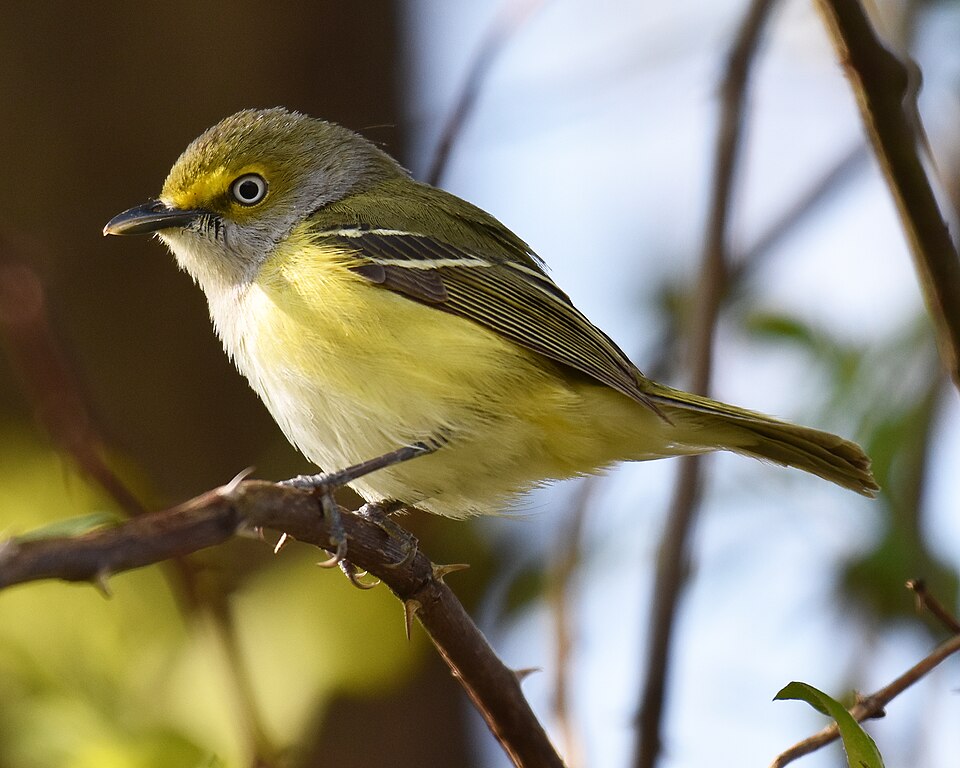

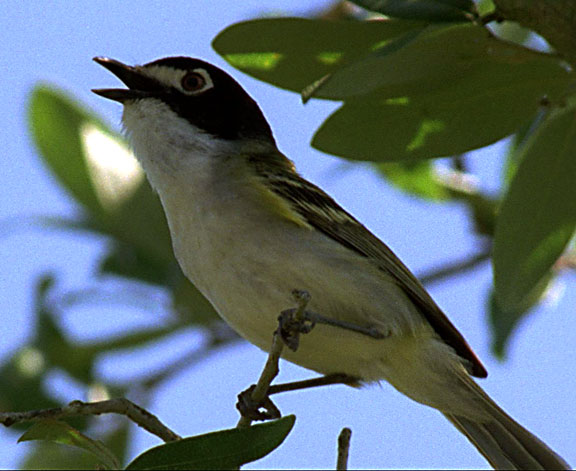

Birds Similar to the Brown-headed Greenlet
These species are often confused with the Brown-headed Greenlet due to similar appearance or overlapping range.

