
Gray-eyed Greenlet
Hylophilus amaurocephalus
Order: Passeriformes / Family: Vireonidae

Wikimedia Commons
About the Gray-eyed Greenlet
The Gray-eyed Greenlet, Hylophilus amaurocephalus, is a small passerine bird belonging to the Vireonidae family. This species primarily inhabits tropical and subtropical forests in northeastern South America. Its range extends across countries such as Brazil, Guyana, and Suriname, where it occupies lowland and foothill forests. A key species in its ecosystem, the Gray-eyed Greenlet plays a role in insect population control due to its insectivorous diet. This small songbird thrives in dense, humid forests, favoring areas with abundant foliage that offer both food and protection from predators.
Ecologically, the Gray-eyed Greenlet contributes to the health of forest ecosystems by aiding in pest control, as it consumes a variety of insects. Its presence indicates a healthy, biodiverse environment, as it relies on intact habitats that support a rich community of insects and plant life. The bird's interaction with its environment highlights the interconnectedness of tropical forest species, where the survival of one often supports the well-being of others.
The Gray-eyed Greenlet exhibits seasonal behaviors influenced by the availability of food and breeding opportunities. While it does not migrate over long distances, it may shift its location within its range in response to seasonal changes in food availability. During the breeding season, typically occurring in the wet months, the bird becomes more vocal, using its song to establish territories and attract mates. These vocalizations are more frequent during the early morning and late afternoon, aligning with peak insect activity. Outside the breeding season, the Gray-eyed Greenlet may form loose flocks, often joining mixed-species foraging groups, which increases foraging success and protection from predators.
The Gray-eyed Greenlet belongs to the family Vireonidae, within the order Passeriformes. These birds typically live average 5-7 years with some reaching up to 10 years..
How to Identify a Gray-eyed Greenlet
The Gray-eyed Greenlet is a small bird, measuring approximately 11-12 cm in length and weighing around 10 grams. Its most distinguishing feature is its pale gray eyes, which contrast with the olive-green plumage that covers the upperparts. The underparts are lighter, with a yellowish wash on the belly and flanks. Juvenile Gray-eyed Greenlets resemble adults but may have slightly duller plumage and less defined eye color. Both sexes appear similar, making visual sex identification challenging in the field.
A potential source of confusion could arise with other greenlets or small vireos, but the Gray-eyed Greenlet's unique eye color and subtle plumage differences can aid in its identification. When observing the bird in flight, note its short, rounded wings and rapid, undulating flight pattern typical of many forest-dwelling songbirds. Unlike some similar species, the Gray-eyed Greenlet maintains a relatively low flight path, often staying within the forest canopy.
Perched, the Gray-eyed Greenlet exhibits a somewhat upright stance, often holding its head high as it scans for insects. Its movements are quick and deliberate as it forages, and it frequently flicks its wings and tail-a behavior that can help identify it in dense foliage. In mixed-species flocks, its presence may be detected by its distinctive call notes rather than visible identification, as it tends to remain within the leafy cover of the forest canopy.
Having trouble telling birds apart? Upload a photo to our bird identification tool for an instant species match.
Gray-eyed Greenlet Habitat and Range
Preferred Habitat
The Gray-eyed Greenlet predominantly inhabits lowland tropical and subtropical forests. It thrives in the densely wooded canopies of northeastern South American countries like Brazil, Guyana, and Suriname. These birds are typically found at elevations ranging from sea level up to approximately 1000 meters, although they are more common in the lower regions.
Within these forests, the Gray-eyed Greenlet shows a preference for areas with a rich supply of insects and ample foliage cover. The bird favors humid, evergreen forests, often being found in primary and mature secondary growth areas. Seasonal shifts within its habitat are generally minimal, but there may be movement to different parts of the forest in response to food availability or during the breeding season.
While primarily a forest dweller, the Gray-eyed Greenlet may occasionally venture into more open areas near the forest edge, particularly during non-breeding periods. However, it is less likely to be found in urban settings, favoring the seclusion and resources provided by undisturbed forest environments.
Geographic Range
The Gray-eyed Greenlet's range is primarily restricted to northeastern South America. Its distribution spans several countries, including Brazil, where it can be found in the states of Pará and Maranhão, as well as in Guyana and Suriname. The species is largely sedentary, maintaining a consistent presence within its range throughout the year.
During the breeding season, which coincides with the wet season, the Gray-eyed Greenlet remains within its established territories, utilizing specific areas rich in food resources and suitable for nesting. These territories are often located in dense, humid forests where the bird can find ample insect prey and nesting sites.
Population density hotspots are most prominent in extensive tracts of continuous forest, where human disturbance is minimal. While the bird's range does not extend into highly urbanized areas, it can occasionally be observed in forest edges adjacent to rural landscapes. Although not a migratory species, the Gray-eyed Greenlet may engage in local movements within its range in response to seasonal changes in food availability or environmental conditions.
Want to know which birds visit your area? Browse our backyard birds by location guides for region-specific species lists.
What Does the Gray-eyed Greenlet Eat?
The diet of the Gray-eyed Greenlet primarily consists of insects and other small arthropods. The bird actively forages among the leaves and branches of the forest canopy, using its keen eyesight to spot prey. It employs a variety of foraging techniques, including gleaning insects from foliage and hawking flying insects mid-air.
Insects such as caterpillars, beetles, and spiders form the bulk of the Gray-eyed Greenlet's diet. It may also consume small quantities of plant material, including fruits and seeds, particularly during periods when insect abundance is low. This dietary flexibility allows the bird to adapt to seasonal changes in food availability, ensuring survival even during leaner times.
The Gray-eyed Greenlet follows a diurnal feeding schedule, with peak foraging activity occurring in the early morning and late afternoon. During these times, insect activity is at its highest, providing ample feeding opportunities. In the non-breeding season, the bird may join mixed-species foraging flocks, enhancing its foraging success through cooperative behaviors.
Gray-eyed Greenlet Behavior and Social Structure
The Gray-eyed Greenlet exhibits a variety of interesting behaviors that reflect its adaptation to forest life. Socially, this bird tends to be solitary or found in pairs during the breeding season, when it becomes more territorial. Males establish and defend territories through vocal displays, using distinctive songs to ward off rivals and attract mates.
Courtship involves mutual displays, including subtle posturing and soft vocal exchanges between potential mates. Once pair bonds are formed, the birds cooperate in nesting and rearing young. Outside the breeding season, the Gray-eyed Greenlet becomes more social, often joining mixed-species flocks. These flocks provide increased protection from predators and efficiency in locating food.
In response to predators, the Gray-eyed Greenlet relies on its agility and dense foliage for protection. It may emit alarm calls to warn conspecifics of danger. Daily activity patterns show the bird to be most active during cooler parts of the day, such as early morning or late afternoon, aligning with peak insect activity. During these times, it actively forages and engages in social interactions.
Gray-eyed Greenlet Nesting and Reproduction
The nesting behavior of the Gray-eyed Greenlet reflects its adaptation to forest environments. The bird constructs a small, cup-shaped nest, typically situated in the fork of a tree branch. Nests are often placed at a moderate height, ranging from 2 to 10 meters above the ground, and are constructed using a variety of materials, including grass, leaves, and spider silk, which provide both camouflage and structural integrity.
The Gray-eyed Greenlet typically lays a clutch of two to three eggs. Both parents participate in incubation, which lasts approximately 12 to 14 days. After hatching, the young are fed by both parents and fledge from the nest about two weeks later. The fledging period is characterized by rapid growth and development, during which the young birds learn essential survival skills.
The species is known to have one or two broods per year, depending on environmental conditions and food availability. Parental roles are shared, with both adults actively involved in feeding and protecting the chicks. The choice of nesting sites within dense foliage helps protect the nest from predators, ensuring higher survival rates for the offspring.
Gray-eyed Greenlet Sounds and Vocalizations
The Gray-eyed Greenlet's primary song is a series of sweet, melodious notes delivered in a rapid sequence. The rhythm of the song is consistent, with a pitch that rises and falls gently, creating a pleasing auditory experience. This song is most often heard at dawn and dusk, times when the bird is most active and territorial.
In addition to its song, the Gray-eyed Greenlet produces a variety of call notes, which include soft whistles and sharp chips used for communication between mates and within flock members. Alarm calls are harsher and more urgent, designed to alert others of potential danger or predators.
The bird's vocalizations are an important tool for maintaining territory and social bonds. The dawn chorus, in which the Gray-eyed Greenlet participates, is a crucial time for these vocal displays, allowing the bird to assert its presence and deter rivals.
Interesting Facts About the Gray-eyed Greenlet
- 1The Gray-eyed Greenlet is one of the few birds in its range with a distinctly pale iris, making its eyes a key identifying feature.
- 2Despite its small size, the Gray-eyed Greenlet can consume a surprising number of insects daily, contributing significantly to pest control.
- 3The bird's nest is often cleverly camouflaged with surrounding vegetation, using materials like spider silk for added strength.
- 4Gray-eyed Greenlets are known for their cooperative foraging behavior, often joining mixed-species flocks to increase feeding efficiency.
- 5Their melodious song is most frequently heard at dawn and dusk, times when they engage in territorial displays and social interactions.
- 6Both male and female Gray-eyed Greenlets share responsibilities in raising their young, from incubation to feeding the fledglings.
- 7The bird's ability to adapt its diet based on seasonal availability demonstrates its ecological flexibility and resilience.
Gray-eyed Greenlet Conservation Status
The Gray-eyed Greenlet is currently listed as a species of Least Concern by the IUCN, indicating a stable population trend. Despite this, the bird faces threats from habitat loss due to deforestation and land conversion for agriculture. These factors pose significant challenges to its habitat, particularly in areas with high rates of human activity. Conservation efforts focus on protecting the bird's habitat through the establishment of protected areas and sustainable land management practices. Historically, the Gray-eyed Greenlet's population has remained stable, benefiting from extensive tracts of undisturbed forest within its range. Continued monitoring and habitat conservation are essential to ensuring the long-term survival of the Gray-eyed Greenlet. Efforts to reduce deforestation and promote biodiversity-friendly practices will support not only this species but the broader ecological communities of which it is a part.
Other Vireonidae Species
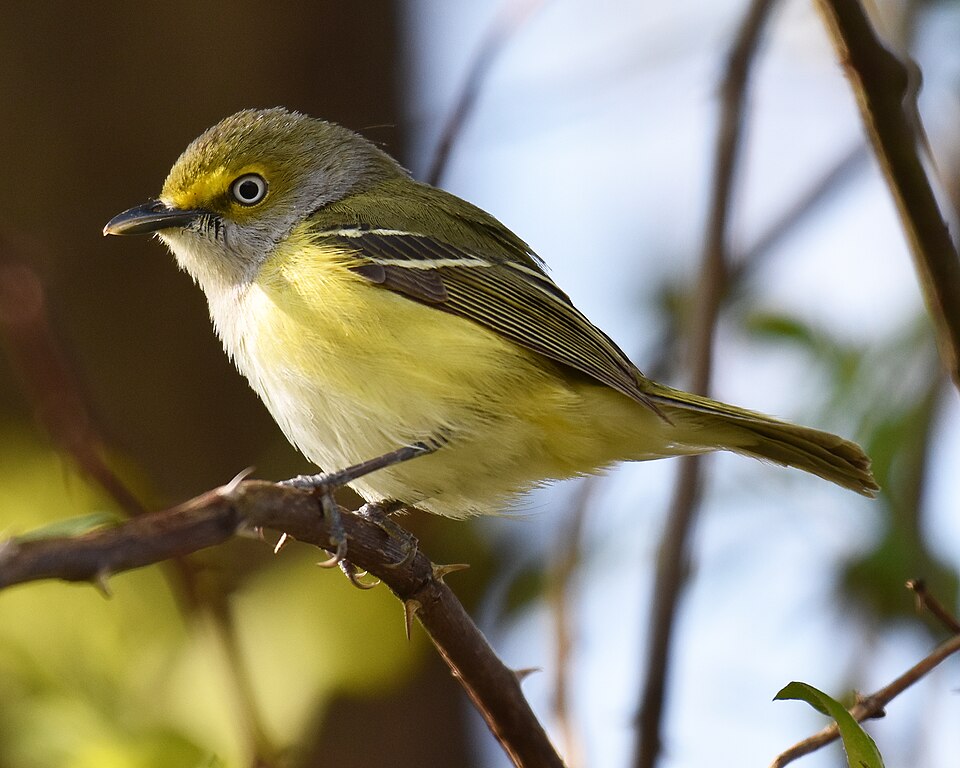

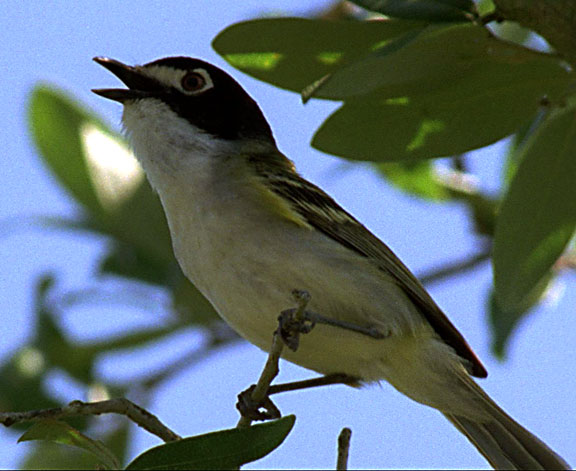

Birds Similar to the Gray-eyed Greenlet
These species are often confused with the Gray-eyed Greenlet due to similar appearance or overlapping range.

