
Golden-fronted Greenlet
Hylophilus aurantiifrons
Order: Passeriformes / Family: Vireonidae

Wikimedia Commons
About the Golden-fronted Greenlet
The Golden-fronted Greenlet (Hylophilus aurantiifrons) is a small songbird belonging to the Vireonidae family, known for its vivid plumage and melodic vocalizations. This bird inhabits the tropical and subtropical forests of Central America, particularly thriving in the dense canopy layers of countries such as Costa Rica, Panama, and Honduras. Its ecological role is significant as it contributes to seed dispersal and insect population control, maintaining the delicate balance of its native ecosystems.
The Golden-fronted Greenlet primarily resides in the lower and mid-levels of forests, often in humid environments where it can be found foraging for food among the foliage. This bird is an integral part of the avian community, as it actively participates in mixed-species flocks, enhancing foraging efficiency and providing a form of protection against predators. The species' presence in these flocks emphasizes its role as a social bird, contributing to the intricate web of interactions that sustain tropical forest biodiversity.
Seasonally, the Golden-fronted Greenlet exhibits certain behavioral adaptations. During the breeding season, which typically aligns with the rainy season in its range, these birds become more territorial, engaging in vocal displays and defensive behaviors to protect their nesting sites. Outside of the breeding season, the Greenlet's movement patterns may be influenced by food availability, resulting in slight shifts in local distribution as it follows resources. Overall, the Golden-fronted Greenlet is a quintessential representative of the dynamic and interconnected avifauna in its habitat, showcasing the complex relationships that define tropical ecosystems.
The Golden-fronted Greenlet belongs to the family Vireonidae, within the order Passeriformes. These birds typically live on average, they live about 5-7 years, with some reaching up to 10 years..
How to Identify a Golden-fronted Greenlet
The Golden-fronted Greenlet is easily recognized by its distinctive golden-yellow forehead, which stands out against its olive-green upperparts. The bird's underparts are a lighter, more subdued grayish color, providing a subtle contrast to the vibrant yellow. Adult males and females share similar plumage characteristics, making gender differentiation challenging in the field. However, juveniles can be identified by their slightly duller coloration and less prominent golden forehead.
In flight, the Golden-fronted Greenlet exhibits a compact silhouette with short wings and a relatively short tail. Its flight is characterized by quick, direct movements, often accompanied by brief glides. When perching, it maintains an upright posture, frequently flicking its wings and tail, a behavior that aids in its identification.
While the Golden-fronted Greenlet is distinct, it may be confused with similar species such as the Dusky-capped Greenlet. However, the latter lacks the bright golden forehead, which is a key feature for distinguishing the Golden-fronted Greenlet. Observers should also note the bird's vocalizations, which can provide additional clues for accurate identification.
Having trouble telling birds apart? Upload a photo to our bird identification tool for an instant species match.
Golden-fronted Greenlet Habitat and Range
Preferred Habitat
The Golden-fronted Greenlet primarily inhabits lowland tropical and subtropical forests, often preferring humid environments with dense canopy cover. In Panama, for example, it can be found in both primary and secondary forests, showcasing its adaptability to various forest conditions. This bird is typically found at elevations ranging from sea level to about 1500 meters, although it is most commonly encountered in lower elevations.
Seasonal habitat shifts are minimal, as the Golden-fronted Greenlet is largely a resident species within its range. However, slight movements may occur locally in response to food availability or during the breeding season when suitable nesting sites are sought. In terms of urban presence, the Golden-fronted Greenlet is less commonly found in highly urbanized areas, preferring the tranquility and resource abundance of forested environments.
In rural areas adjacent to forested regions, this bird may occasionally be spotted in gardens or agricultural lands, particularly if these areas provide sufficient vegetative cover. Its preference for forested habitats underscores the importance of preserving these environments to support its population.
Geographic Range
The Golden-fronted Greenlet's range extends across parts of Central America, with notable populations in countries such as Costa Rica, Panama, and Honduras. Within these regions, it occupies a variety of forest types, from lowland rainforests to montane forests, although it is most prevalent in humid lowland areas.
During the breeding season, the bird's range does not expand significantly, as it remains largely resident within its established territories. Unlike many migratory birds, the Golden-fronted Greenlet does not undertake long-distance migrations, a behavior supported by the year-round availability of resources in its tropical habitat.
Population density hotspots include areas with lush, undisturbed forest cover, such as the Osa Peninsula in Costa Rica and the Darien region in Panama. These areas offer optimal conditions for the species, including abundant food sources and suitable nesting sites. Conservation efforts in these regions are crucial for maintaining the viability of Golden-fronted Greenlet populations.
Want to know which birds visit your area? Browse our backyard birds by location guides for region-specific species lists.
What Does the Golden-fronted Greenlet Eat?
The diet of the Golden-fronted Greenlet primarily consists of insects and other small arthropods, making it an important insectivore within its ecosystem. Its foraging technique involves gleaning insects from leaves and branches, often using quick, agile movements to capture prey. This bird is known to consume a variety of insect species, including caterpillars, beetles, and spiders, contributing to the control of insect populations.
During the breeding season, the Greenlet's diet may shift slightly to include more protein-rich insects, which are essential for the successful rearing of young. While insects remain the primary food source, the Golden-fronted Greenlet may also consume small amounts of fruit, particularly during times when insect abundance is low.
Feeding typically occurs during the cooler parts of the day, such as early morning and late afternoon, aligning with periods of increased insect activity. This schedule allows the Greenlet to maximize its foraging efficiency while avoiding the higher temperatures of midday.
Golden-fronted Greenlet Behavior and Social Structure
The Golden-fronted Greenlet is a social bird, often observed in mixed-species flocks, which provide both foraging advantages and protection from predators. Within these flocks, the Greenlet maintains a cooperative yet competitive dynamic, engaging in subtle displays to assert its presence and secure food resources.
Territorial behavior becomes more pronounced during the breeding season, with pairs establishing and defending specific areas within the forest. Courtship displays include vocalizations and physical posturing, designed to attract mates and reinforce pair bonds. Once paired, the Greenlet exhibits strong parental investment, with both males and females participating in nest building and chick rearing.
The bird's response to predators involves a combination of vocal alarms and evasive flight, often retreating to dense foliage for cover. Daily activity patterns for the Golden-fronted Greenlet include periods of active foraging interspersed with rest and preening, reflecting a balance between energy expenditure and conservation.
Golden-fronted Greenlet Nesting and Reproduction
Golden-fronted Greenlets construct cup-shaped nests using fine plant materials such as grass, leaves, and spider silk. These nests are typically placed in the fork of a tree branch, several meters above the ground, providing both concealment and protection from ground-based predators.
The typical clutch size for the Golden-fronted Greenlet ranges from two to three eggs, which are incubated primarily by the female. The incubation period lasts approximately 12 to 14 days, during which the male plays a supportive role by providing food for the female.
Once hatched, the chicks are altricial, requiring intensive care and feeding by both parents. The fledging period lasts about 10 to 14 days, after which the young birds continue to receive parental support as they learn to forage independently. Typically, the Golden-fronted Greenlet raises one to two broods per year, depending on environmental conditions and resource availability.
Golden-fronted Greenlet Sounds and Vocalizations
The primary song of the Golden-fronted Greenlet consists of a series of high-pitched, melodious notes delivered in a rapid succession. This song serves multiple purposes, including mate attraction and territory defense. The quality of the song can be described as clear and flute-like, with a rhythm that is both repetitive and enchanting.
Call notes are shorter and less musical, often used for communication between flock members or as alarm calls in response to threats. These calls are sharp and distinct, providing an effective means of conveying urgency or cohesion within the group.
During the dawn chorus, the Golden-fronted Greenlet's song is particularly prominent, contributing to the vibrant soundscape of the tropical forest. Its vocalizations, while similar to other vireonids, possess unique tonal qualities that can aid in distinguishing it from similar species.
Interesting Facts About the Golden-fronted Greenlet
- 1The Golden-fronted Greenlet is known to participate in mixed-species flocks, enhancing its foraging efficiency.
- 2Despite its vibrant appearance, the Golden-fronted Greenlet's nests are well camouflaged, blending seamlessly with the surrounding foliage.
- 3This bird is a year-round resident, unlike many vireos that migrate long distances seasonally.
- 4Golden-fronted Greenlets contribute to seed dispersal, playing a role in the propagation of tropical plants.
- 5The species' vocalizations are not only used for communication but also serve as an important tool for territory defense.
Golden-fronted Greenlet Conservation Status
The Golden-fronted Greenlet is currently classified as Least Concern by the IUCN, with stable population trends across its range. Despite this status, habitat loss due to deforestation poses a significant threat to its long-term viability. Conservation efforts focus on preserving and restoring natural forest habitats, particularly in regions undergoing rapid land-use changes. Historically, the Golden-fronted Greenlet's population has remained relatively stable, but ongoing monitoring is essential to detect any shifts that may occur due to environmental pressures. Collaborative conservation initiatives, involving local communities and international organizations, play a crucial role in safeguarding the habitats that support this and other forest-dependent species.
Other Vireonidae Species
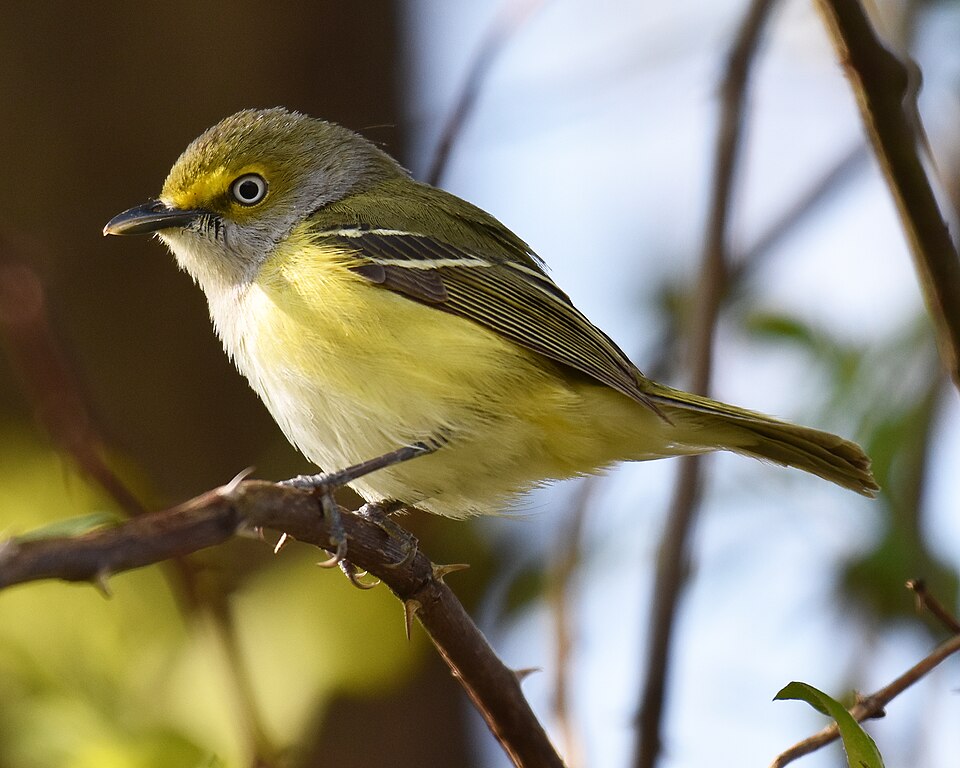

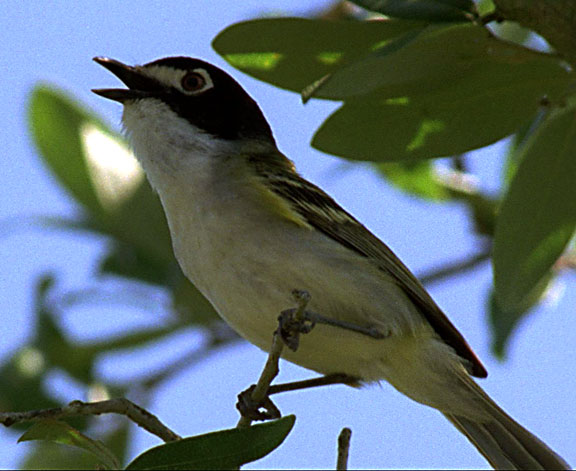

Birds Similar to the Golden-fronted Greenlet
These species are often confused with the Golden-fronted Greenlet due to similar appearance or overlapping range.

