
Buff-cheeked Greenlet
Hylophilus muscicapinus
Order: Passeriformes / Family: Vireonidae

Wikimedia Commons
About the Buff-cheeked Greenlet
The Buff-cheeked Greenlet, scientifically known as Hylophilus muscicapinus, is a small passerine bird belonging to the family Vireonidae, which is notably abundant in neotropical regions. This species is an integral part of the ecosystem in which it resides, contributing to seed dispersal and insect population control. Found predominantly in the tropical and subtropical forests of northern South America, particularly in Venezuela, Colombia, and parts of Brazil, this bird thrives in humid lowland environments. These areas, rich in biodiversity, provide abundant resources necessary for the Buff-cheeked Greenlet's survival. The bird's presence in these forests highlights the interconnectedness of species within these ecosystems.
The Buff-cheeked Greenlet plays a significant ecological role by participating in the control of insect populations through its diet, which consists primarily of small insects and arthropods. This diet not only sustains the bird but also helps maintain balance within the forest ecosystem. Additionally, the Buff-cheeked Greenlet contributes to the pollination of some plant species, although to a lesser extent compared to its insect consumption role. As a species that inhabits densely forested areas, its presence indicates a healthy, undisturbed ecosystem-a critical factor for conservation efforts in the face of deforestation and habitat destruction.
The bird's seasonal behaviors align with the wet and dry seasons of its habitat. During the wet season, its activity increases with the abundance of food and nesting material, while during the dry season, its movements might become more localized as it adapts to the reduced availability of resources. The Buff-cheeked Greenlet's adaptability to these seasonal changes underscores its resilience, making it an essential subject for ornithologists studying the impacts of climate variability on tropical bird species.
The Buff-cheeked Greenlet belongs to the family Vireonidae, within the order Passeriformes. These birds typically live typically 3-5 years in the wild..
How to Identify a Buff-cheeked Greenlet
The Buff-cheeked Greenlet is easily recognizable by its vivid green plumage, which covers most of its body, providing excellent camouflage against the forest canopy. The most distinctive feature is its buff-colored cheeks, which contrast with its otherwise green and olive tones. Adults typically exhibit a more pronounced cheek color, while juveniles may have slightly duller feathers. The bird's underparts can range from pale yellow to whitish, depending on lighting and wear.
Males and females of the species exhibit little sexual dimorphism, making it challenging to differentiate them visually. However, during the breeding season, males might display slightly brighter hues, potentially aiding in mate attraction. When compared to similar species, such as the Red-eyed Vireo or the Yellow-green Vireo, the Buff-cheeked Greenlet's cheek color and smaller size are distinguishing factors. Its flight silhouette is compact, with a short tail and rounded wings, typical of vireonids.
In perching posture, the Buff-cheeked Greenlet often adopts an upright stance, scanning its surroundings for prey or potential threats. Its movements are deliberate and methodical, often seen hopping from branch to branch or gleaning insects from leaf surfaces. Observers should note its characteristic head-bobbing motion and frequent tail flicking, which can aid in field identification.
Having trouble telling birds apart? Upload a photo to our bird identification tool for an instant species match.
Buff-cheeked Greenlet Habitat and Range
Preferred Habitat
The preferred habitat of the Buff-cheeked Greenlet includes tropical and subtropical forests, with a particular affinity for humid lowland forests and secondary growth areas. These environments provide the dense foliage and abundant insect life necessary for its survival. The species is typically found at elevations ranging from sea level to about 1,500 meters, although it is most commonly encountered in lower altitudes where the forest canopy is lush and dense.
During seasonal shifts, the Buff-cheeked Greenlet may adapt its habitat preferences slightly. In response to resource availability, it might move to areas with flowering plants or increased insect activity. While primarily a forest dweller, this bird can occasionally be found in rural gardens or forest edges, especially if these areas are adjacent to more extensive forest tracts. However, it is less commonly observed in highly urbanized environments, as it prefers the cover and resources provided by natural habitats.
Geographic Range
The Buff-cheeked Greenlet primarily inhabits northern South America, with its range extending through Venezuela, Colombia, and parts of Brazil. Within these countries, it is most prevalent in forested regions where the climate and vegetation align with its ecological needs. The breeding range is largely confined to these areas, where conditions are optimal for nesting and raising young.
Unlike some migratory bird species, the Buff-cheeked Greenlet is predominantly a resident species, remaining within its range year-round. However, slight altitudinal movements may occur in response to seasonal changes in food availability or climate. Population density tends to be higher in areas with intact forest cover and less human disturbance, highlighting the importance of preserving these habitats for the species' continued survival.
Want to know which birds visit your area? Browse our backyard birds by location guides for region-specific species lists.
What Does the Buff-cheeked Greenlet Eat?
The diet of the Buff-cheeked Greenlet consists primarily of small insects and arthropods, which it forages from the forest canopy and understory. This insectivorous diet includes caterpillars, beetles, spiders, and other small invertebrates. During the wet season, when insect abundance is at its peak, the Buff-cheeked Greenlet takes full advantage of the plentiful food supply, which supports its breeding and nesting activities.
In addition to insects, the bird occasionally supplements its diet with small fruits and berries, particularly during times when insects are less available. The Buff-cheeked Greenlet employs a foraging technique that involves gleaning insects from leaves and branches, often seen hanging upside down or performing acrobatic maneuvers to reach hidden prey. Feeding typically occurs during daylight hours, with peak activity in the early morning and late afternoon when temperatures are cooler and insect activity is high.
Buff-cheeked Greenlet Behavior and Social Structure
The Buff-cheeked Greenlet exhibits a range of behaviors that reflect its adaptability and ecological niche. Socially, it is generally solitary or found in pairs during the breeding season, becoming more territorial as it establishes nesting sites. Its territorial behavior includes vocal displays and occasional physical confrontations with intruding individuals.
Courtship displays are subtle, often involving soft calls and mutual preening between mates. The Buff-cheeked Greenlet does not form large flocks but may join mixed-species foraging groups, which provides increased protection from predators and efficient resource exploitation. In response to predators, the bird employs alarm calls and evasive flight patterns, retreating into dense foliage for cover.
Daily activity patterns are characterized by periods of feeding interspersed with rest and preening. As a diurnal species, the Buff-cheeked Greenlet is most active during daylight, with peak periods in the early morning and late afternoon, aligning with optimal foraging conditions.
Buff-cheeked Greenlet Nesting and Reproduction
Nesting for the Buff-cheeked Greenlet involves constructing a small cup-shaped nest, typically positioned in the fork of a tree branch or within dense shrubbery. The nest is crafted from fine plant materials, including grass, leaves, and spider silk, which provide both structure and camouflage.
Preferred nesting sites are located within dense forest areas, offering protection from predators and environmental elements. The female lays a clutch of 2-3 eggs, with an incubation period lasting approximately 12-14 days. During this time, both parents share incubation duties, as well as feeding and caring for the hatchlings once they emerge.
The fledging period lasts about 10-12 days, during which the young birds develop flight skills and independence. Typically, the Buff-cheeked Greenlet produces one brood per year, although favorable conditions may permit a second brood.
Buff-cheeked Greenlet Sounds and Vocalizations
The Buff-cheeked Greenlet's vocalizations include a series of soft, melodic whistles that serve as its primary song. These notes are clear and resonate through the forest, often described as a series of 'cheedle-cheedle' sounds. Call notes are softer and more subdued, used during intra-pair communication and as contact calls when foraging.
Alarm calls are sharp and distinct, serving as warnings to other birds of potential threats. During the dawn chorus, the Buff-cheeked Greenlet's song is among the first heard, contributing to the vibrant soundscape of its habitat. Its vocalizations are less complex than those of some vireo relatives, yet they play a crucial role in maintaining territory and social bonds.
Interesting Facts About the Buff-cheeked Greenlet
- 1The Buff-cheeked Greenlet is often mistaken for a warbler due to its size and feeding habits, though it belongs to a different family.
- 2Its distinctive buff-colored cheeks make it one of the easier greenlets to identify in the field, especially in mixed-species flocks.
- 3The Buff-cheeked Greenlet is known for its acrobatic foraging style, often seen hanging upside down to reach insects.
- 4Despite its name, the Buff-cheeked Greenlet's plumage is predominantly green, aiding in its camouflage among the forest canopy.
- 5This species plays a crucial role in controlling insect populations within its forest habitat, highlighting its ecological importance.
- 6The Buff-cheeked Greenlet's song is less complex than some of its relatives, yet it remains an important means of communication.
- 7During the breeding season, the male Buff-cheeked Greenlet's plumage can become slightly brighter, aiding in mate attraction.
Buff-cheeked Greenlet Conservation Status
The Buff-cheeked Greenlet is classified as Least Concern by the IUCN, with population trends currently considered stable. However, habitat destruction due to deforestation poses a significant threat to its long-term survival. Conservation efforts focus on protecting forested areas and promoting sustainable land use practices. Although not currently endangered, the Buff-cheeked Greenlet benefits from initiatives aimed at preserving biodiversity hotspots and mitigating habitat fragmentation. Historical population changes are not well-documented, but the bird's presence in large tracts of undisturbed forest suggests resilience in the face of environmental pressures.
Other Vireonidae Species
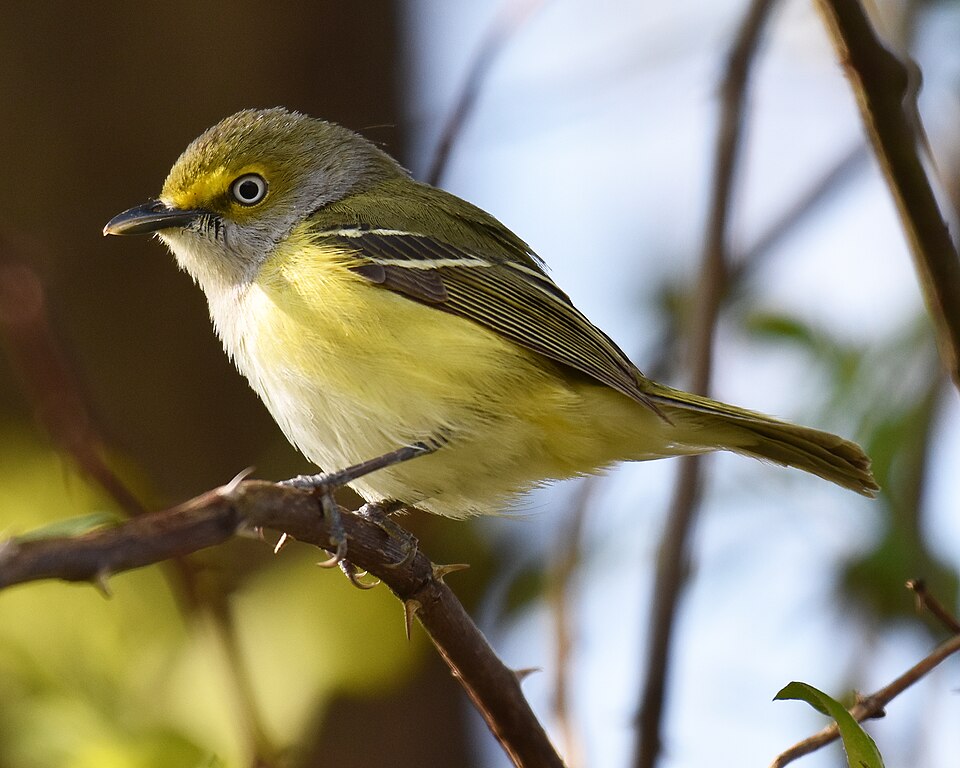

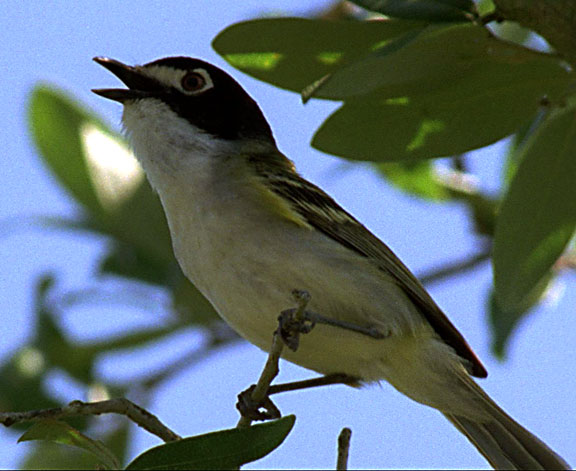

Birds Similar to the Buff-cheeked Greenlet
These species are often confused with the Buff-cheeked Greenlet due to similar appearance or overlapping range.
