
Plumbeous Vireo
Vireo plumbeus
Order: Passeriformes / Family: Vireonidae

Wikimedia Commons
About the Plumbeous Vireo
The Plumbeous Vireo (Vireo plumbeus) is a charismatic small songbird belonging to the Vireonidae family, renowned for its melodious song and slate-gray plumage. Found predominantly in the western United States, this species inhabits open woodlands, particularly in regions with a mixture of coniferous and deciduous trees. It thrives in areas like the Rocky Mountains and the Great Basin. During the breeding season, the Plumbeous Vireo becomes a common sight in pine-oak forests and along riparian corridors, where its vocalizations contribute to the vibrant soundscape of these habitats.
The significance of the Plumbeous Vireo extends beyond its role in avian acoustics. As an insectivore, it plays a crucial part in controlling insect populations, thus maintaining the ecological balance within its ecosystem. The bird's preference for diverse habitats, ranging from mountainous regions to open woodlands, indicates its adaptability and ecological importance across a variety of landscapes. Its presence is a marker of healthy forest ecosystems, often found in areas that support a rich biodiversity.
Seasonally, the behavior of the Plumbeous Vireo shifts significantly. During spring and summer, it engages in breeding activities, constructing nests and rearing young. The bird often migrates to lower elevations or further south as winter approaches, where it continues to forage actively for insects and berries. This migratory pattern ensures its survival through varying seasonal conditions and highlights its adaptability to different environmental pressures. The Plumbeous Vireo's ecological role, coupled with its distinctive songs, makes it a subject of interest for birders and ecologists alike.
The Plumbeous Vireo belongs to the family Vireonidae, within the order Passeriformes. These birds typically live average lifespan of 5-7 years with a maximum recorded of 10 years.
How to Identify a Plumbeous Vireo
The adult Plumbeous Vireo is easily identified by its slate-gray upperparts and contrasting white underparts. It has a distinctive white eyering that connects to white lores, forming the appearance of spectacles. The wings display two white wing bars that stand out against the gray plumage. This bird's stout, slightly hooked bill is characteristic of vireos, aiding in its insectivorous diet. Juvenile Plumbeous Vireos tend to have more muted plumage, with a browner tint, and may lack the crispness of the adult's white markings.
Male and female Plumbeous Vireos appear similar, making visual sex differentiation challenging in the field. However, males often sing more persistently during the breeding season, a behavior that can help distinguish between the sexes. In flight, the Plumbeous Vireo displays a compact silhouette, with rounded wings and a slightly notched tail. Its perching posture is typically upright, and it often flits through foliage methodically as it forages.
Confusion with similar species, such as the Cassin's Vireo and the Blue-headed Vireo, can occur. However, the Plumbeous Vireo's overall grayer tone and habitat preference help differentiate it. The Cassin's Vireo, for instance, tends to have a more olive coloration, while the Blue-headed Vireo displays a more pronounced contrast between its blue-gray head and white throat.
Having trouble telling birds apart? Upload a photo to our bird identification tool for an instant species match.
Plumbeous Vireo Habitat and Range
Preferred Habitat
The Plumbeous Vireo favors open woodlands, particularly those featuring a mix of pine, oak, and juniper trees. It is commonly found in montane forests of the western United States, from the Rocky Mountains to the Sierra Nevada. The bird typically inhabits elevations ranging from 1,500 to 3,000 meters, depending on geographic location. During the breeding season, it frequents areas with dense foliage that provide ample nesting sites and food resources.
Seasonal habitat shifts are observed as the Plumbeous Vireo migrates to lower elevations and regions with milder winter climates. It may frequent riparian zones and deciduous woodlands during these times. While primarily a forest dweller, the Plumbeous Vireo can occasionally be found in suburban areas that offer suitable vegetation. However, it is less common in urban centers, preferring the relative solitude and abundant resources of rural and mountainous regions.
Geographic Range
The breeding range of the Plumbeous Vireo spans much of the western United States, including states like Colorado, Arizona, New Mexico, and parts of California. The bird's distribution extends into Mexico, where it breeds in suitable montane habitats. During the winter, the Plumbeous Vireo migrates to lower elevations, moving as far south as Central America, including regions in Honduras and Nicaragua.
Migration corridors typically follow the Rocky Mountains and other major mountain ranges, facilitating the bird's movement between breeding and wintering grounds. Population density tends to be higher in areas with abundant forest cover and minimal human disturbance. Notably, the bird is less common in the eastern United States, where its range overlaps with those of similar vireo species.
Want to know which birds visit your area? Browse our backyard birds by location guides for region-specific species lists.
What Does the Plumbeous Vireo Eat?
Primarily an insectivore, the Plumbeous Vireo feeds on a diverse array of insects, including caterpillars, beetles, and spiders. Its foraging technique involves gleaning insects from foliage as it moves methodically through the canopy. During the breeding season, the bird's diet focuses heavily on protein-rich insects, essential for chick development.
Seasonal dietary changes occur as the Plumbeous Vireo incorporates more berries and small fruits during migration and winter when insects become less abundant. This dietary flexibility aids its survival across different habitats and seasons. The bird typically forages alone or in pairs, showing peak feeding activity during the early morning and late afternoon.
Plumbeous Vireo Behavior and Social Structure
The Plumbeous Vireo exhibits a territorial nature, especially during the breeding season when males sing persistently to establish and defend their territories. These birds are generally monogamous, with pairs forming bonds that last through the breeding season. Courtship displays include mutual preening and vocal duets.
Socially, the Plumbeous Vireo tends to be solitary or found in pairs, though it may join mixed-species flocks during migration. This behavior provides safety in numbers and increases foraging efficiency. In response to predators, the bird often employs alarm calls and may engage in mobbing behavior to deter threats. Daily activity patterns show increased vocalization during dawn and dusk, with periods of rest occurring during the hottest parts of the day.
Plumbeous Vireo Nesting and Reproduction
The Plumbeous Vireo constructs a cup-shaped nest, typically placed in the fork of a tree branch, several meters above the ground. The nest is made from grass, bark strips, and spider silk, creating a sturdy yet camouflaged structure. The female lays a clutch of 3 to 5 eggs, which she incubates for about 13 to 15 days.
Both parents participate in feeding the chicks, which fledge approximately 14 to 16 days after hatching. The Plumbeous Vireo often raises one to two broods per year, depending on food availability and environmental conditions. Parental roles are shared, though the female primarily handles incubation while the male provides food and protection.
Plumbeous Vireo Sounds and Vocalizations
The Plumbeous Vireo's song consists of a series of clear, whistled phrases with a rhythm that is deliberate and slightly varied. Each phrase usually contains two to three notes, repeated in a pattern that is both musical and diagnostic of the species. Call notes include sharp, single-note chips used for communication between mates and during foraging.
Alarm calls are more abrupt and serve as warnings to other birds of potential threats. The species is known for its role in the dawn chorus, contributing a sweet, persistent melody that marks its presence in the forest. Its song resembles that of other vireos but is distinguishable by its unique phrasing and tonal quality.
Interesting Facts About the Plumbeous Vireo
- 1The Plumbeous Vireo's song can be heard up to 100 meters away, making it a prominent voice in its habitat.
- 2Despite their small size, Plumbeous Vireos can travel over 3,000 kilometers during migration.
- 3The species was once considered a subspecies of the Solitary Vireo before being recognized as distinct in 1997.
- 4Plumbeous Vireos have a unique foraging behavior, often hanging upside-down to reach insects.
- 5Their nests are often camouflaged with lichens and moss, blending seamlessly with their surroundings.
- 6They play a critical role in controlling insect populations, consuming thousands of insects each season.
- 7Vireo plumbeus is one of the few songbirds that can effectively mimic the calls of other bird species.
Plumbeous Vireo Conservation Status
The Plumbeous Vireo currently holds a status of Least Concern on the IUCN Red List, with population trends appearing stable. However, habitat loss due to deforestation poses a significant threat to its long-term survival. Conservation efforts focus on preserving its natural habitats through sustainable forestry practices and land management policies. Historical population changes have seen fluctuations linked to habitat availability and climate conditions. Efforts to monitor these trends continue, ensuring the Plumbeous Vireo remains a thriving component of its ecological community.
Other Vireonidae Species
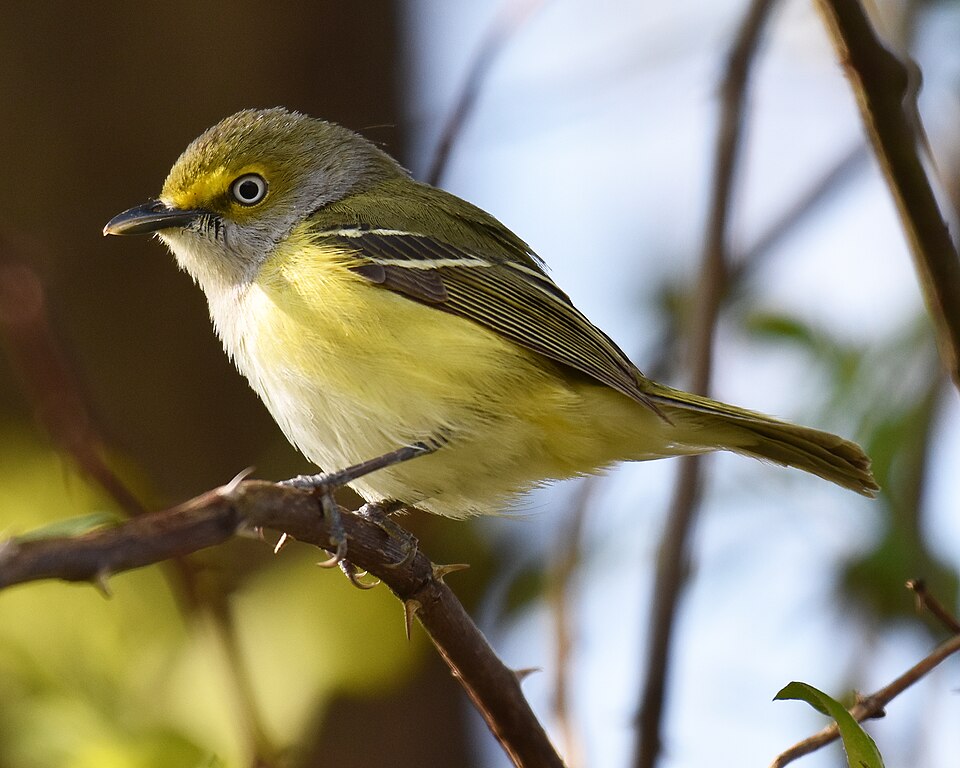

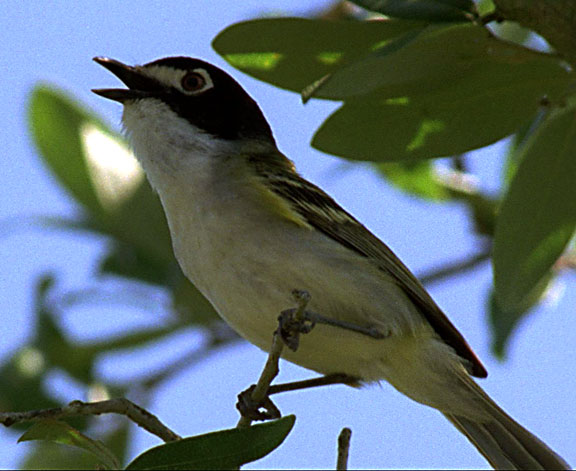

Birds Similar to the Plumbeous Vireo
These species are often confused with the Plumbeous Vireo due to similar appearance or overlapping range.

