
Blue-headed Vireo
Vireo solitarius
Order: Passeriformes / Family: Vireonidae

Wikimedia Commons
About the Blue-headed Vireo
The Blue-headed Vireo, Vireo solitarius, is a small North American songbird that captivates bird watchers with its distinct appearance and melodic voice. Characterized by its blue-gray head, white spectacles, and olive-green back, this vireo is a visual treat in the deciduous and mixed forests it inhabits. These birds play a crucial role in the ecosystem as insectivores, helping control pest populations and thus maintaining forest health. They primarily breed in the eastern parts of North America, from southern Canada down through the northeastern United States, extending into the Appalachian Mountains. During the breeding season, which typically starts in late April, the Blue-headed Vireo establishes territories in mature forests, often preferring areas with dense foliage for nesting. Males are known for their persistent singing, a behavior that not only attracts mates but also serves as a territorial proclamation. As autumn approaches, these birds migrate to the southeastern United States, Mexico, and Central America, where they spend the winter months in warmer climates. In their wintering grounds, Blue-headed Vireos adapt to different habitats, ranging from tropical forests to scrublands, showcasing their ecological versatility. Their diet shifts with the seasons, with a more fruit-heavy intake during winter. This seasonal migration highlights the bird's adaptability and the critical role of habitat conservation across its range. Observing Blue-headed Vireos offers insights into the complex migratory behaviors of songbirds and underscores the importance of protecting habitats across borders to ensure their survival.
The Blue-headed Vireo belongs to the family Vireonidae, within the order Passeriformes. These birds typically live average lifespan is around 5 years with a maximum recorded of 8 years..
How to Identify a Blue-headed Vireo
The Blue-headed Vireo is easily recognizable by its distinctive blue-gray head, contrasting sharply with its white throat and belly. The olive-green back and wings, adorned with two white wing bars, further distinguish it from similar species. Juvenile Blue-headed Vireos resemble adults but with a duller plumage and less distinct head coloring. Male and female Blue-headed Vireos appear similar, although males may exhibit slightly brighter colors during the breeding season. A potential source of confusion is the closely related Cassin's Vireo, found in the western United States, which shares similar markings but generally has a more muted head color. The Blue-headed Vireo's flight silhouette is typical of small passerines, with a compact body and rounded wings, while its perching posture is upright, allowing for excellent visibility of its striking head markings.
Having trouble telling birds apart? Upload a photo to our bird identification tool for an instant species match.
Blue-headed Vireo Habitat and Range
Preferred Habitat
The Blue-headed Vireo primarily inhabits mature deciduous and mixed forests across its range. It shows a preference for habitats with dense foliage, such as the forest understory or the edges of woodlands. During the breeding season, it is often found at elevations ranging from sea level to 2,000 meters, particularly in areas with abundant conifers. In winter, the Blue-headed Vireo demonstrates versatility, occupying a range of habitats from tropical rainforests to scrublands. It occasionally ventures into urban parks and large gardens, although it typically favors more natural settings. Seasonal shifts in habitat selection are driven by food availability and climatic conditions, illustrating the species' adaptability to varying environmental contexts.
Geographic Range
The Blue-headed Vireo breeds across a wide range, primarily in the eastern United States and southern Canada. Its breeding range extends from the Canadian provinces of Manitoba and Newfoundland down through the northeastern United States, including states like New York, Pennsylvania, and into the Appalachian Mountains. In winter, the Blue-headed Vireo migrates to the southeastern United States, from Florida to Texas, and further into Mexico and Central America, reaching as far south as Panama. Migration corridors typically follow the Atlantic Flyway, with notable stopover sites along the Gulf Coast. Population density is highest in forested regions with abundant foliage, such as the Appalachian Mountains and the Great Lakes region, where the bird finds optimal breeding conditions.
Want to know which birds visit your area? Browse our backyard birds by location guides for region-specific species lists.
What Does the Blue-headed Vireo Eat?
The Blue-headed Vireo primarily feeds on insects and other invertebrates, which it forages from foliage and tree branches. Its diet includes caterpillars, beetles, and spiders, which it catches using a methodical gleaning technique. During the breeding season, when insects are abundant, it relies heavily on these protein-rich food sources to raise its young. In winter, the vireo's diet shifts to include a greater proportion of fruits and berries, such as those from mistletoe and various shrubs, providing necessary energy for migration and survival in less insect-rich environments. The bird forages alone or in mixed flocks, often following other insectivorous birds to locate food efficiently.
Blue-headed Vireo Behavior and Social Structure
Blue-headed Vireos exhibit solitary or paired behavior during the breeding season, establishing territories that they defend vigorously from intruders. Males engage in prolonged singing bouts to attract mates and ward off competitors. Courtship involves subtle displays, such as wing flicking and mutual preening. Outside the breeding season, Blue-headed Vireos may join mixed-species foraging flocks, which enhances their efficiency in locating food and provides safety in numbers. These birds are diurnal, with peak activity periods in the morning and late afternoon. In response to predators, Blue-headed Vireos rely on their cryptic plumage and swift flight to avoid detection, often remaining motionless until danger passes.
Blue-headed Vireo Nesting and Reproduction
Blue-headed Vireos construct cup-shaped nests, typically suspended from a forked branch in the dense foliage of a tree or shrub. These nests are intricately woven with grasses, bark strips, and spider silk, camouflaged with lichens and moss. The female lays 3-5 eggs per clutch, which both parents incubate for approximately 12-14 days. After hatching, the altricial chicks remain in the nest for another 11-13 days before fledging. Both parents share feeding duties, bringing insects and small invertebrates to the chicks. The Blue-headed Vireo usually raises one brood per year, though a second brood may occur in favorable conditions.
Blue-headed Vireo Sounds and Vocalizations
The Blue-headed Vireo's song is a melodious series of short, whistled phrases, often described as a repetitive 'here-I-am, where-are-you.' Its calls include a harsh, scolding chatter used in alarm situations, while contact calls are softer and less structured. During the dawn chorus, males sing prominently, using their songs to establish territory and communicate with potential mates. The song's rhythm and pitch can vary slightly between individuals, adding a unique quality to each bird's vocalizations.
Interesting Facts About the Blue-headed Vireo
- 1The Blue-headed Vireo was once considered a subspecies of the Solitary Vireo but is now recognized as a distinct species.
- 2This vireo can sing over 20 different song types, showcasing a diverse vocal repertoire.
- 3Blue-headed Vireos sometimes use snake skins in their nest construction, an unusual choice among songbirds.
- 4Males and females share equally in incubating the eggs, a behavior not always seen in bird species.
- 5During migration, they can travel over 2,000 miles to reach their wintering grounds in Central America.
- 6These birds are often found participating in mixed-species foraging flocks, enhancing their foraging success.
- 7The Blue-headed Vireo's eye-catching spectacles help differentiate it from similar species, like the Plumbeous Vireo.
Blue-headed Vireo Conservation Status
The Blue-headed Vireo is listed as Least Concern by the IUCN, with stable population trends across its range. While not currently threatened, habitat loss through deforestation poses a potential risk. Conservation efforts focus on preserving critical breeding and wintering habitats, particularly mature forests and areas of high biodiversity. Historical data suggests that while populations have experienced fluctuations, current numbers remain robust, supported by widespread conservation measures in North America. Continued monitoring and habitat protection are essential to ensure the long-term viability of this species.
Other Vireonidae Species
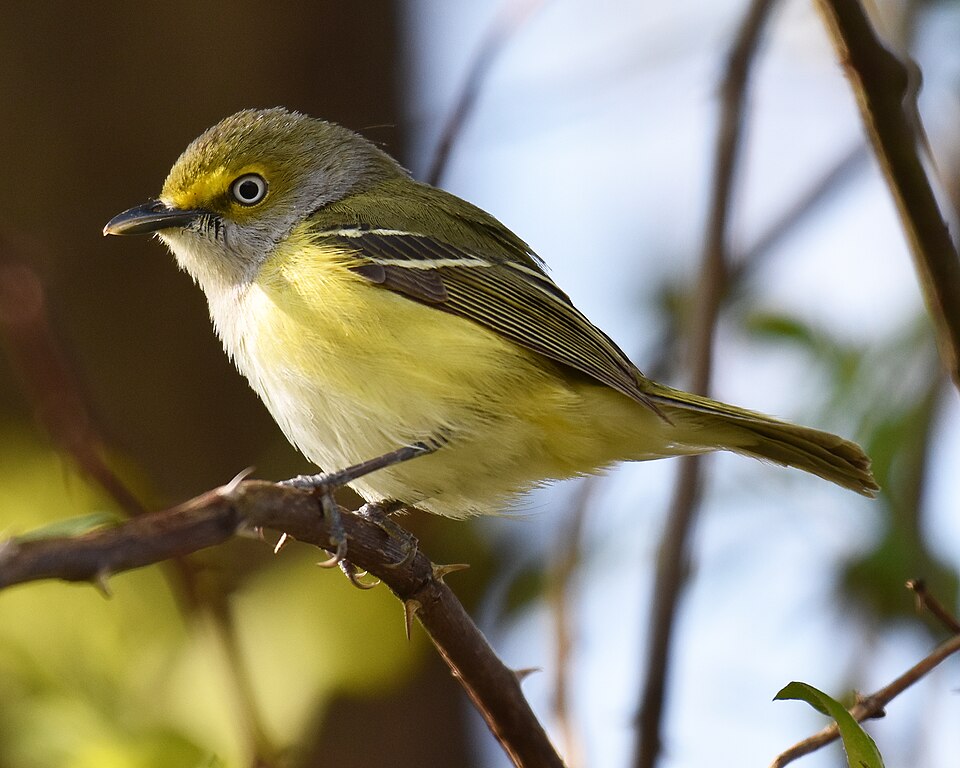

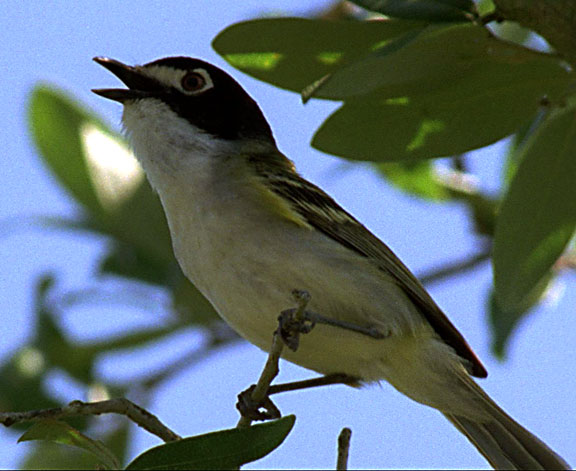

Birds Similar to the Blue-headed Vireo
These species are often confused with the Blue-headed Vireo due to similar appearance or overlapping range.


