
Rock Pipit
Anthus petrosus
Order: Passeriformes / Family: Motacillidae

Wikimedia Commons
About the Rock Pipit
The Rock Pipit (Anthus petrosus) is a small passerine bird belonging to the Motacillidae family, renowned for its adept adaptation to coastal environments. Found predominantly along the rugged shorelines of Western Europe, its presence stretches from the British Isles to the cliffs of Norway. This species plays a vital ecological role as both a predator and prey, controlling insect populations while serving as a food source for larger avian predators. During the breeding season, Rock Pipits establish territories on steep, rocky terrains where vegetation is sparse, highlighting their reliance on specific environmental niches. Their behavior is notably solitary, especially in breeding months, where males engage in aerial displays to assert dominance and attract mates. Seasonal behaviors indicate slight migrations, particularly in northern populations, moving southward during harsher winter months. However, many remain year-round residents if conditions are favorable. As a species, the Rock Pipit demonstrates remarkable resilience and adaptability to harsh coastal climates, thriving where few others can.
The Rock Pipit belongs to the family Motacillidae, within the order Passeriformes. These birds typically live typically 3-4 years, with a maximum recorded at 10 years..
How to Identify a Rock Pipit
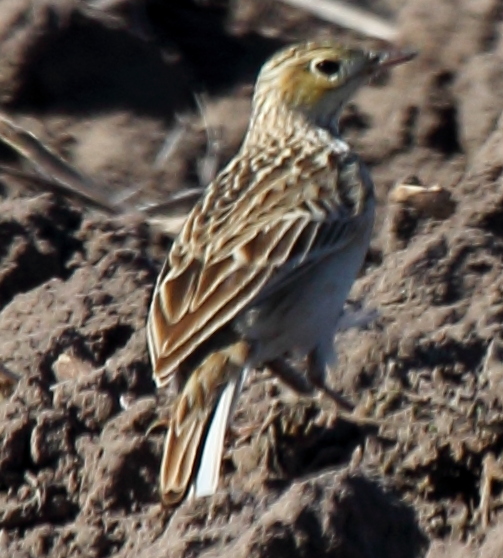
Adult Rock Pipits exhibit a predominantly brown-gray plumage, with subtle streaking that provides excellent camouflage against the rocky coastlines they frequent. The underparts are typically lighter, with a noticeable darker streaking on the breast and flanks. Males and females appear similar, although males might show slightly more vibrant plumage during the breeding season. Juveniles resemble adults but can appear even more muted in color. In flight, their silhouette is characterized by a streamlined body and a relatively short tail, with wings that produce a rapid, fluttering motion. Perching Rock Pipits often appear hunched, with a slight downward angle to their posture, which aids in blending into their environment. While some may confuse them with the Meadow Pipit (Anthus pratensis), the Rock Pipit can be distinguished by its darker overall coloration and preference for coastal habitats.
Having trouble telling birds apart? Upload a photo to our bird identification tool for an instant species match.
Rock Pipit Habitat and Range
Preferred Habitat
Rock Pipits are strongly associated with coastal habitats, often seen on rocky shores, cliffs, and islands where their cryptic plumage offers protection from predators. They thrive at sea level, rarely venturing inland except during severe weather conditions. Although primarily found on natural coastal terrains, they can adapt to some man-made structures such as sea walls and jetties. Unlike many pipit species, the Rock Pipit shows little inclination to occupy grassland or agricultural settings, underscoring their specialized habitat preference. Seasonal shifts may occur, with some northern populations moving to slightly more sheltered coastal areas during winter.
Geographic Range
The Rock Pipit breeds primarily along the western coastlines of Europe, from the British Isles down to the Atlantic coasts of France and Spain. Northern populations extend into Scandinavia, including the coastal areas of Norway and western Sweden. During winter, the range contracts slightly, with some birds moving southward along the European coast. They are largely sedentary in the British Isles, where they can be observed year-round. Migration corridors are relatively narrow, confined to the coastlines they inhabit, which makes them less visible than more migratory pipit species. Population density hotspots include the British Isles and Norway, where suitable habitats are abundant.
Want to know which birds visit your area? Browse our backyard birds by location guides for region-specific species lists.
What Does the Rock Pipit Eat?
The Rock Pipit's diet consists primarily of small invertebrates, particularly insects such as flies, beetles, and caterpillars, which they adeptly forage among the rocks and tidal zones. During the winter months, when insect availability decreases, they may consume small crustaceans and mollusks, capitalizing on the abundant resources of the intertidal zone. Their foraging technique involves a combination of walking and hopping along the ground, often seen probing into crevices or turning over small stones with their beaks. This methodical approach allows them to exploit a wide range of prey sizes, from tiny larvae to larger beetles. Feeding primarily during daylight hours, Rock Pipits adjust their foraging patterns according to the ebb and flow of the tide, optimizing their access to food.
Rock Pipit Behavior and Social Structure
Rock Pipits exhibit a largely solitary behavior outside the breeding season, with individuals maintaining loose territories along the coast. During the breeding season, males become more territorial, performing aerial song displays to assert dominance and attract females. Courtship involves both visual and vocal displays, with males singing prominently from perches or during flight. These birds do not form large flocks, though they may be found in small groups, particularly during migration or in areas with abundant food resources. In response to predators, Rock Pipits rely on their camouflage and quick, erratic flight patterns to evade capture. They are diurnal, most active during the early morning and late afternoon, coinciding with peak invertebrate activity.
Rock Pipit Nesting and Reproduction
Rock Pipits typically nest in crevices or under rocks on steep, rocky coastal cliffs. Their nests are constructed from grass, seaweed, and moss, forming a well-camouflaged cup. The typical clutch size ranges from three to five eggs, which are pale with darker speckling. The female primarily incubates the eggs over a period of about 13 to 15 days. After hatching, both parents participate in feeding the chicks, which fledge approximately two weeks later. Rock Pipits usually raise one brood per year, although in favorable conditions, a second brood may be attempted. Nesting sites are chosen with care to protect from exposure to the elements and predators, demonstrating their adaptability to challenging environments.
Rock Pipit Sounds and Vocalizations
The primary song of the Rock Pipit is a series of melodious, repeating notes that can be heard echoing across the rocky coastlines. Its rhythm is consistent, with a somewhat raspy quality that distinguishes it from other pipits. Call notes include a sharp, metallic 'pseep,' often used in alarm or to keep contact with mates. During the dawn chorus, their song becomes more frequent and intense, serving to establish territory and attract potential mates. Compared to the Meadow Pipit, the Rock Pipit's song is slightly more complex and less hurried, fitting their more solitary and stoic nature.
Interesting Facts About the Rock Pipit
- 1The Rock Pipit has been observed using small pieces of seaweed to line its nest, providing insulation and camouflage.
- 2Unlike many songbirds, the Rock Pipit thrives almost exclusively in coastal habitats, rarely venturing inland.
- 3During the breeding season, Rock Pipits engage in elaborate aerial displays, showcasing their agility and territorial prowess.
- 4The Rock Pipit's preference for rocky coastlines makes it one of the few small birds regularly found in such harsh environments.
- 5Their foraging behavior is highly synchronized with tidal cycles, maximizing their access to emerging invertebrates.
- 6The Rock Pipit can be mistaken for the Meadow Pipit, but its preference for coastal areas helps distinguish it.
- 7Rock Pipits often remain year-round residents in milder coastal areas, relying on their adaptability to survive winter.
Rock Pipit Conservation Status
Currently, the Rock Pipit is listed as a species of Least Concern by the IUCN, with stable population trends across most of its range. However, localized threats include habitat destruction from coastal development and pollution. Conservation efforts focus on protecting coastal habitats and monitoring populations to ensure long-term stability. Historically, the population has remained relatively stable, with few significant declines reported, thanks largely to their niche specialization and adaptability to coastal environments.
Other Motacillidae Species



Birds Similar to the Rock Pipit
These species are often confused with the Rock Pipit due to similar appearance or overlapping range.

