
Vireo josephae
Vireo josephae
Order: Passeriformes / Family: Vireonidae
About the Vireo josephae
The Vireo josephae, commonly referred to as the Yellow-winged Vireo, is a small passerine bird in the Vireonidae family. This species is notable for its vibrant olive-green plumage and distinctive yellow wing bars, which make it stand out in its natural habitat. The Yellow-winged Vireo inhabits the humid lowland and montane forests of Central America, with a range extending from southern Mexico through Costa Rica and into western Panama. Its preference for dense, subtropical woodlands reflects its need for abundant foliage where it can forage for insects and other small invertebrates, which form the core of its diet.
Ecologically, the Yellow-winged Vireo plays a crucial role in insect population control, thus influencing the health of the ecosystems it inhabits. By feeding on a variety of arthropods, it helps maintain a balance within its ecological community. This bird is also an indicator species, reflecting the health of its forest environment. The presence or absence of Vireo josephae can provide insight into the state of biodiversity and the impact of deforestation in its habitat.
This species is particularly active during the breeding season, which occurs from March to July. During this period, Vireo josephae engages in elaborate courtship displays and territorial defense. The males, in particular, are known for their persistent singing, a behavior that not only attracts mates but also deters rival males. Outside of the breeding season, these birds may form loose flocks, often associating with mixed-species feeding groups. This social behavior enhances their ability to locate food resources and offers some protection against predators.
Vireo josephae is a resident species, meaning it does not undertake long-distance migrations like some of its relatives. Instead, it exhibits altitudinal movements, shifting between different elevations in response to seasonal changes in food availability. In the wetter months, it may be found at higher elevations, while in drier periods, it descends to lower altitudes where food sources are more accessible.
The Vireo josephae belongs to the family Vireonidae, within the order Passeriformes. These birds typically live average of 5 years, with some living up to 8 years..
How to Identify a Vireo josephae
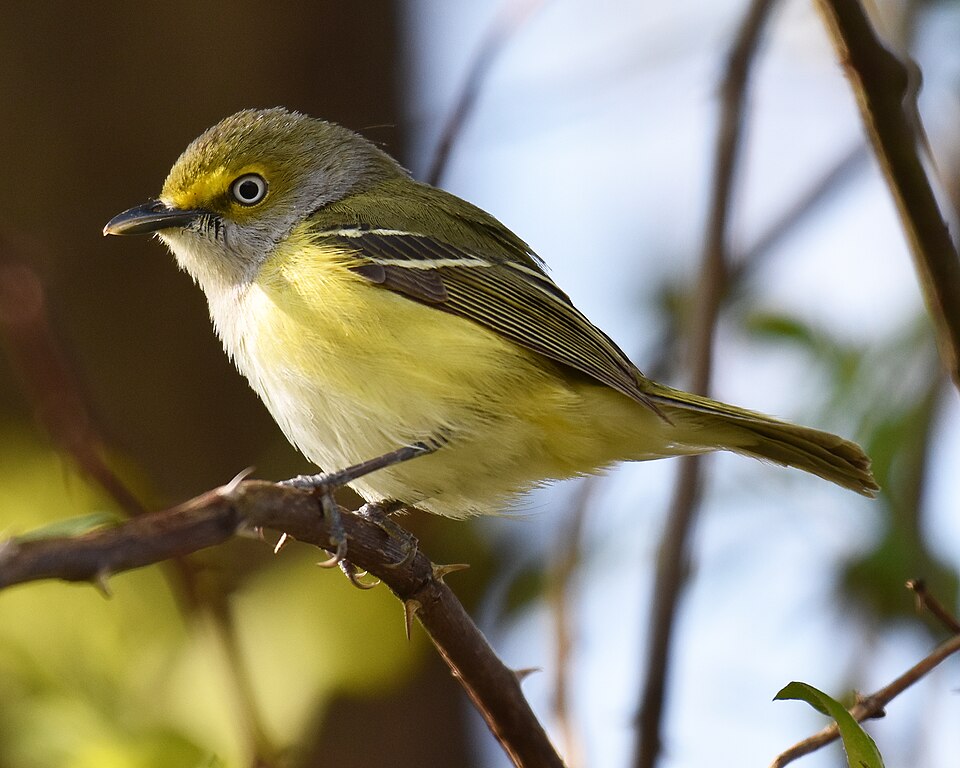
Identifying the Yellow-winged Vireo involves observing several key field marks. Adult Vireo josephae exhibit a striking combination of olive-green upperparts with a more subdued grayish underbelly. Their most distinguishing feature is the bright yellow wing bars, which contrast sharply with their otherwise olive-green wings. The head is marked by a faint white supercilium above the eye, adding to its distinctive appearance.
Juvenile Yellow-winged Vireos often present a duller plumage compared to adults, with less pronounced yellow on the wings and a more muted overall coloration. Both sexes appear similar, making it challenging to distinguish between males and females solely based on plumage. However, subtle differences may be noticed in behavior, particularly during the breeding season when males are more vocal and active in defending territories.
The Vireo josephae can sometimes be confused with other vireos, such as the Philadelphia Vireo or the Red-eyed Vireo. However, the yellow wing bars and olive-green coloration are reliable distinguishing features. In flight, its small size and rapid wing beats are characteristic, while its perching posture is typically upright and alert, often seen foraging methodically through foliage.
Having trouble telling birds apart? Upload a photo to our bird identification tool for an instant species match.
Vireo josephae Habitat and Range
Preferred Habitat
The Yellow-winged Vireo primarily inhabits humid subtropical and tropical forests. It favors areas with dense canopies, where it can forage for insects amongst the leaves and branches. This bird thrives at elevations ranging from sea level up to about 2,500 meters, although it is most commonly found between 500 and 1,500 meters. Seasonal habitat shifts are common in this species. During the wet season, it may be found at higher elevations within cloud forests, while the dry season sees it moving to lower, more humid areas.
While it generally prefers rural or semi-rural environments, Vireo josephae can occasionally be found in urban green spaces, particularly if these areas offer ample tree cover. However, its presence in urban settings is less frequent compared to more undisturbed habitats, as it relies heavily on a natural forest environment for feeding and breeding.
Geographic Range
The Vireo josephae has a relatively limited range confined to the Central American region. Its breeding range spans from the southern parts of Mexico, including regions like Chiapas, down through Guatemala, Honduras, Nicaragua, and into Costa Rica. In Costa Rica, it is particularly abundant in the Caribbean slopes and the central highlands, extending into western Panama.
Unlike some other vireos, the Yellow-winged Vireo does not undertake extensive migrations. Instead, it is considered a resident species throughout its range. However, it does exhibit some altitudinal movement in response to seasonal changes in food availability and climatic conditions. Population density hotspots include the cloud forests of Costa Rica and the lowland rainforests of Panama, where the species finds optimal conditions for breeding and foraging.
Want to know which birds visit your area? Browse our backyard birds by location guides for region-specific species lists.
What Does the Vireo josephae Eat?
The diet of the Yellow-winged Vireo primarily consists of insects and other small arthropods, which it gleans from foliage as it moves methodically through the forest canopy. Common prey items include caterpillars, beetles, spiders, and ants. This insectivorous diet plays a crucial role in controlling insect populations within its habitat.
Seasonal variations influence its dietary habits. During the breeding season, the demand for protein-rich food increases, prompting the Vireo josephae to focus on larger prey items. In contrast, during the non-breeding period, its diet may include a higher proportion of smaller insects and occasionally some plant material, such as berries or seeds, when insect abundance declines.
Foraging occurs throughout the day, with peak activity often seen in the early morning and late afternoon when insect activity is highest. The Yellow-winged Vireo employs a 'glean and snatch' technique, where it picks insects directly from leaves and branches with precision.
Want to attract Vireo josephaes to your yard? See our recommended feeders and seed types for the best results.
Vireo josephae Behavior and Social Structure
The Yellow-winged Vireo exhibits fascinating behaviors, particularly during the breeding season. It is highly territorial, with males defending their territories vigorously through song and physical displays. The male's song, a series of pleasant, repetitive phrases, serves both to attract a mate and deter competitors. Courtship displays often involve fluttering flights and feeding gestures directed towards potential mates.
Socially, Vireo josephae is typically solitary or found in pairs, especially during the breeding season. However, outside this period, it may join mixed-species flocks, a behavior that enhances feeding efficiency and offers protection from predators. These flocks often include other insectivorous birds, increasing the chances of locating abundant food sources.
Daily, the Yellow-winged Vireo is most active in the early morning and late afternoon, aligning its activity with peak insect availability. Its response to predators includes a series of alarm calls and evasive maneuvers, using dense foliage as cover. Despite its small size, it can be surprisingly bold in defending its nest and territory.
Vireo josephae Nesting and Reproduction
Nesting for the Yellow-winged Vireo involves constructing a small, cup-shaped nest typically situated in the fork of a shrub or tree branch. The nest, woven from grass, plant fibers, and spider silk, provides a secure environment for the eggs. The location is often chosen for its dense foliage, offering camouflage and protection from predators.
The female predominantly undertakes incubation duties, with a typical clutch size ranging from two to four eggs. These eggs are pale with faint spotting, requiring an incubation period of about 12 to 14 days. Both parents participate in feeding the hatchlings, which fledge approximately 14 to 16 days after hatching.
The Yellow-winged Vireo usually raises one brood per year, although in particularly favorable conditions, a second brood may be attempted. Parental roles are well-defined, with both male and female sharing responsibilities, although the female often takes the lead in nurturing young chicks.
Vireo josephae Sounds and Vocalizations
The primary song of the Yellow-winged Vireo is a melodious, repetitive series of phrases that resemble a soft, rolling chatter. This song is instrumental in territory defense and mate attraction. It consists of 3 to 5 syllables delivered in a steady rhythm, with a pitch that varies slightly to maintain listener interest.
Call notes are sharp and more clipped, often used in communication between mates or as an alert to the presence of intruders. The alarm call, a series of faster, more urgent notes, signals potential danger and is used to rally other birds in the area. During the dawn chorus, males are particularly vocal, using this time to assert dominance and maintain territorial boundaries.
Interesting Facts About the Vireo josephae
- 1The Yellow-winged Vireo can be distinguished from others by its unique yellow wing bars, a rare trait among vireos.
- 2Despite its small size, Vireo josephae plays a significant role in controlling insect populations, aiding forest health.
- 3This species is largely sedentary, with altitudinal movements rather than long migrations, adapting well to its forested range.
- 4A typical nesting season for the Yellow-winged Vireo sees it raising one brood, with up to four eggs per clutch.
- 5During breeding season, males sing persistently, a behavior crucial for territory defense and mate attraction.
- 6Vireo josephae often joins mixed-species flocks outside of breeding season, enhancing foraging success.
- 7The Yellow-winged Vireo's song is a soft, rolling chatter that plays a key role in communication and mating.
Vireo josephae Conservation Status
Currently, the IUCN lists the Yellow-winged Vireo as a species of Least Concern, though its population trends require monitoring due to habitat loss. Deforestation for agriculture and urban development poses the most significant threat to its habitat. Despite this, the species remains relatively common within its range, thanks to its adaptability to different forest types. Conservation efforts focus on preserving critical habitats and promoting sustainable land-use practices. Historical population changes have been minimal, but ongoing habitat fragmentation could impact its numbers in the future. Continued research and monitoring are essential to ensure that the Yellow-winged Vireo remains a thriving part of Central America’s avifauna.
Attracting Vireo josephaes to Your Feeder
The Vireo josephae is a regular visitor to backyard bird feeders across its range. At the Eye On The Fly feeding station, we observe Vireo josephaes regularly and capture footage with our feeder cameras.
Other Vireonidae Species


Birds Similar to the Vireo josephae
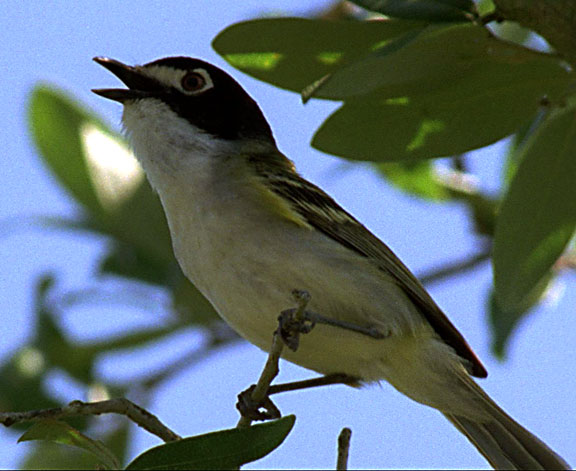
These species are often confused with the Vireo josephae due to similar appearance or overlapping range.

