
Cassin's Vireo
Vireo cassinii
Order: Passeriformes / Family: Vireonidae

Wikimedia Commons
About the Cassin's Vireo
Cassin's Vireo (Vireo cassinii) is a small songbird within the family Vireonidae, commonly found across western North America. It is a member of a group known colloquially as the 'solitary vireos' due to its often solitary nature outside of the breeding season. This species primarily inhabits coniferous and mixed woodlands, where its presence is marked by its clear and pleasant song. Cassin's Vireo displays significant ecological importance as an insectivore, helping to regulate pest populations within its habitat. During the breeding season, it frequents areas rich in dense foliage that provide ample cover for nesting and feeding.
The bird's range extends from southern British Columbia and Alberta in Canada south through the western United States to northern Baja California in Mexico. Its breeding habitats include pine, fir, oak, and mixed forests, often at elevations ranging from sea level to about 3,000 meters. Cassin's Vireo is a migratory species, and its movements are closely tied to the availability of food and suitable habitat. During winter, it migrates to lower elevations, particularly in California and the southwestern United States, though its range can extend as far south as parts of Mexico.
The Cassin's Vireo plays a pivotal role in its ecosystem, particularly during breeding when it consumes large quantities of insects. This consumption provides a natural pest control service, benefiting the broader ecological community. Its presence also indicates the health of its forest habitat, as it requires a specific combination of mature trees and understory for successful breeding and foraging. Seasonal behaviors such as migration and breeding are intricately tied to the availability of these resources, making Cassin's Vireo a key indicator species for monitoring environmental changes.
The Cassin's Vireo belongs to the family Vireonidae, within the order Passeriformes. These birds typically live average lifespan is 4-5 years, with a maximum recorded up to 7 years..
How to Identify a Cassin's Vireo
Cassin's Vireo is easily recognizable in the field by its distinguished white spectacles, a unique feature among vireos. Adults exhibit olive-green upperparts that blend into pale underparts, with a subtle yellow wash on the flanks. Their wings exhibit a pair of faint white wing bars, while the eyes are accentuated by the prominent white eyering connected by a line over the bill, forming the 'spectacles' look.
Juvenile Cassin's Vireos resemble adults but are generally duller, with less distinct spectacles and overall paler plumage. Males and females are similar in appearance, making gender differentiation challenging without behavioral cues such as singing. One could confuse Cassin's Vireo with the closely related Plumbeous Vireo or Blue-headed Vireo; however, the former lacks the yellow flanks, while the latter has a more vivid blue-gray head.
In flight, Cassin's Vireo displays a direct and steady flight pattern. When perched, it often holds its body horizontally with a slight downward angle to the tail, a posture typical of many vireos. These field marks and behaviors assist birdwatchers and ornithologists in distinguishing Cassin's Vireo from similar species.
Having trouble telling birds apart? Upload a photo to our bird identification tool for an instant species match.
Cassin's Vireo Habitat and Range
Preferred Habitat
Cassin's Vireo thrives in a variety of forested habitats, predominantly favoring coniferous and mixed woodlands. It can be found in pine, fir, and oak forests, often at elevations ranging from sea level to 3,000 meters. This species prefers areas with abundant understory and dense foliage, which provide cover and foraging opportunities.
During the breeding season, Cassin's Vireo seeks out mature forests with a mix of tree species that support a rich insect population. In winter, it descends to lower elevations and may inhabit chaparral, riparian woodlands, and even urban parks. Although primarily a forest dweller, it exhibits some adaptability by occasionally venturing into open woodlands and shrubby areas.
Cassin's Vireo is less common in arid or open landscapes, preferring the shelter and resources provided by tree cover. The bird's presence in urban areas is usually limited to parks and greenbelts where sufficient tree cover mimics its natural habitat.
Geographic Range
Cassin's Vireo breeds across a broad swath of western North America. Its breeding range extends from southern British Columbia and Alberta, southward through Washington, Oregon, and California, reaching as far east as Montana and Wyoming. The bird is also found in parts of Nevada, Utah, and Arizona during the breeding season.
As a migratory species, Cassin's Vireo travels to lower elevations and warmer climates for the winter months. Its wintering range includes central and southern California, Arizona, New Mexico, and into parts of northwestern Mexico. Migration corridors typically follow mountain ranges and forested valleys, reflecting the bird's preference for wooded environments even during transit.
Within its range, population density is highest in regions where the preferred forest habitats are abundant and varied. Areas such as the Sierra Nevada and the coastal ranges of California serve as population hotspots due to their extensive coniferous and mixed forests.
Want to know which birds visit your area? Browse our backyard birds by location guides for region-specific species lists.
What Does the Cassin's Vireo Eat?
Cassin's Vireo primarily consumes insects and other arthropods, making it an effective insectivore. Its diet includes caterpillars, beetles, ants, and spiders. During the breeding season, when insect populations peak, it actively forages in the tree canopy, gleaning insects from leaves and branches.
In addition to insects, Cassin's Vireo occasionally supplements its diet with small fruits and berries, especially during the fall and winter months when insect availability declines. Its foraging behavior involves deliberate movements and frequent pauses as it searches for prey, often working its way methodically through the foliage.
The bird typically feeds during daylight hours, with peak activity in the morning and late afternoon. Prey size varies, but it typically targets small to medium-sized insects that can be easily managed. Cassin's Vireo's foraging techniques and dietary preferences help maintain ecological balance by controlling insect populations.
Cassin's Vireo Behavior and Social Structure
Cassin's Vireo exhibits a largely solitary lifestyle outside the breeding season, aligning with its membership among the 'solitary vireos.' However, during breeding, it becomes territorial, with males singing frequently to establish and defend their territory. Courtship involves both song and displays, with the male often presenting food to the female as part of the mating ritual.
Socially, Cassin's Vireo is known to join mixed-species foraging flocks, particularly during migration and winter. This behavior facilitates efficient foraging and offers protection from predators. When threatened, Cassin's Vireo may give a harsh, scolding call to alert other birds to the presence of danger.
Daily activity patterns are influenced by foraging needs and weather conditions. The bird is most active during the cooler parts of the day, such as early morning and late afternoon, when it forages and sings. While generally not nocturnal, some limited night activity may occur during migration. Its behavior reflects a balance between the need to feed, defend territory, and avoid predators.
Cassin's Vireo Nesting and Reproduction
Cassin's Vireo constructs a cup-shaped nest, typically built in the fork of a tree branch to minimize exposure to predators. The nest is woven from grass, bark strips, and spider silk, with fine materials lining the interior for comfort and insulation.
Preferred nesting sites are often located in dense foliage, providing cover and reducing the risk of predation. The female lays a clutch of 3 to 5 eggs, which she incubates for about 12 to 14 days. Both parents participate in feeding the nestlings, which fledge approximately 12 to 16 days after hatching.
Cassin's Vireo may produce one to two broods per year, depending on environmental conditions and food availability. Parental roles are shared, with both sexes involved in nest construction, incubation, and chick rearing. This cooperative breeding strategy enhances reproductive success in variable habitats.
Cassin's Vireo Sounds and Vocalizations
Cassin's Vireo's song is a series of short, melodious phrases, each lasting several seconds. The rhythm is deliberate and fluted, with a mix of rising and falling notes that create a soothing, musical quality. Its primary song serves to establish territory and attract mates during the breeding season.
Call notes are typically a harsh, repeated 'cheer' or 'cheery,' used to communicate with mates or deter intruders. Alarm calls are more abrupt and sharper, alerting other birds to potential threats.
During the dawn chorus, Cassin's Vireo often sings continuously, contributing to the vibrant auditory landscape of its forest habitat. Its song is less complex than that of some other songbirds, but its clarity and consistency make it easy to recognize.
Interesting Facts About the Cassin's Vireo
- 1Cassin's Vireo was named after John Cassin, a notable 19th-century American ornithologist known for his work on bird classification.
- 2During migration, Cassin's Vireo can travel over 2,000 miles from its breeding grounds to wintering areas in Mexico.
- 3Cassin's Vireo occasionally uses old nests from previous years, refurbishing them with fresh materials for a new breeding season.
- 4The bird's song repertoire includes over a dozen song types, which males use to communicate with females and rivals.
- 5Cassin's Vireo can often be heard before it is seen, as it tends to remain hidden within dense foliage while singing.
- 6Unlike more gregarious vireos, Cassin's Vireo often forages alone or in pairs, reflecting its solitary nature.
- 7Cassin's Vireo is closely related to the Blue-headed Vireo and Plumbeous Vireo, forming a complex known as the 'solitary vireos.'
Cassin's Vireo Conservation Status
Cassin's Vireo currently holds a status of Least Concern under the IUCN Red List, with stable population trends observed across much of its range. The primary threats include habitat loss due to logging and land development, which can reduce available nesting sites and foraging grounds. Conservation efforts focus on preserving mature forest habitats and promoting sustainable forestry practices. Historical data indicate population fluctuations in response to habitat changes but no significant long-term declines. Ongoing monitoring aims to detect any emerging threats, and habitat restoration projects in degraded areas provide additional support for maintaining healthy populations. The species' adaptability to varied forest types contributes to its resilience.
Other Vireonidae Species
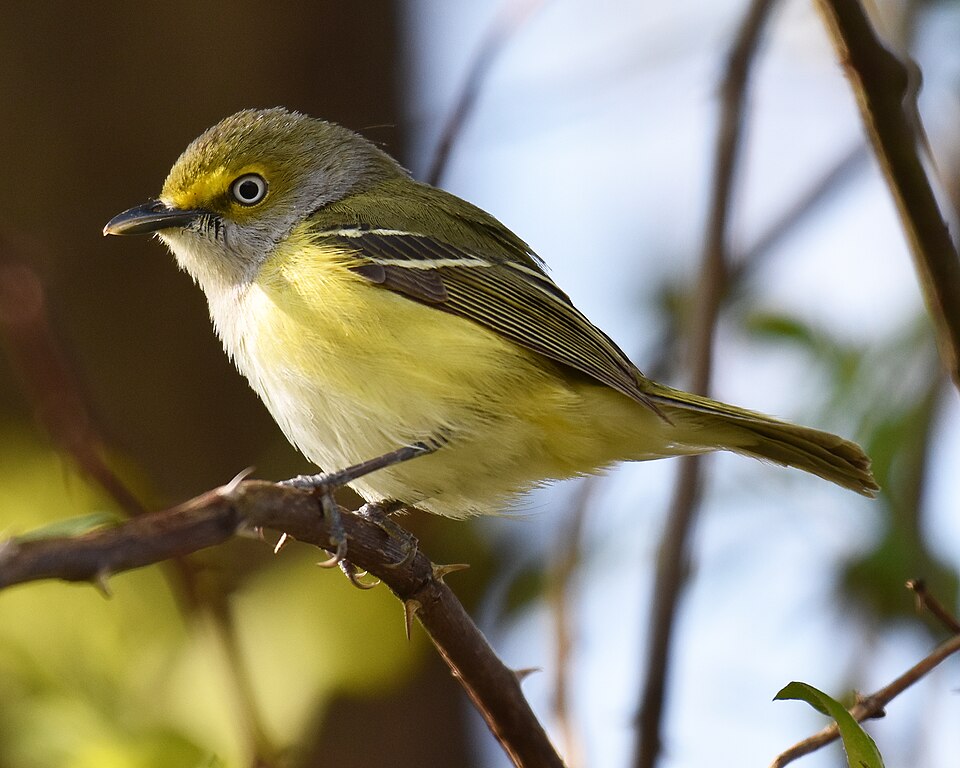

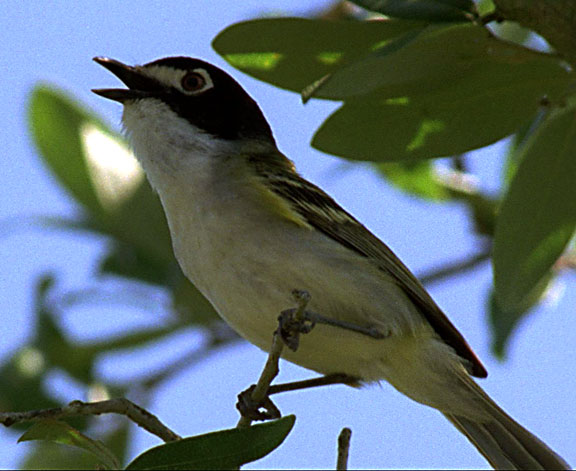

Birds Similar to the Cassin's Vireo
These species are often confused with the Cassin's Vireo due to similar appearance or overlapping range.


