
Yellow-green Vireo
Vireo flavoviridis
Order: Passeriformes / Family: Vireonidae

Wikimedia Commons
About the Yellow-green Vireo
The Yellow-green Vireo, Vireo flavoviridis, is a vibrant passerine bird belonging to the family Vireonidae. This species plays a significant role in ecosystems across its range, particularly in Central and South America, where it acts as both a predator of insects and a disperser of seeds. During the breeding season, the Yellow-green Vireo inhabits the southern United States, notably in Texas, where its numbers have increased in recent years.
In these regions, the bird exploits a variety of habitats, including deciduous and mixed woodlands, where it can find ample food and nesting sites. This vireo is known for its adaptability to different forest types, from dense rainforests to open riparian woodlands, making it an important player in these ecological communities.
The Yellow-green Vireo's migration patterns are another fascinating aspect of its biology. In the fall, it migrates southwards to its wintering grounds in Central America and northern South America, including countries like Colombia and Venezuela. During migration, the vireo can often be seen in mixed-species flocks, taking advantage of the safety in numbers. This seasonal movement allows it to exploit different food resources and avoid harsh weather conditions, contributing to its survival and reproductive success.
Throughout its range, the Yellow-green Vireo maintains a balanced ecosystem by controlling insect populations and aiding in plant reproduction through seed dispersal. It is an integral part of the avian community and serves as an indicator of forest health. As forests face threats from deforestation and climate change, the presence and abundance of the Yellow-green Vireo can provide valuable insights into the state of these complex ecosystems.
The Yellow-green Vireo belongs to the family Vireonidae, within the order Passeriformes. These birds typically live average lifespan is around 5 years with a maximum recorded lifespan of 10 years..
How to Identify a Yellow-green Vireo
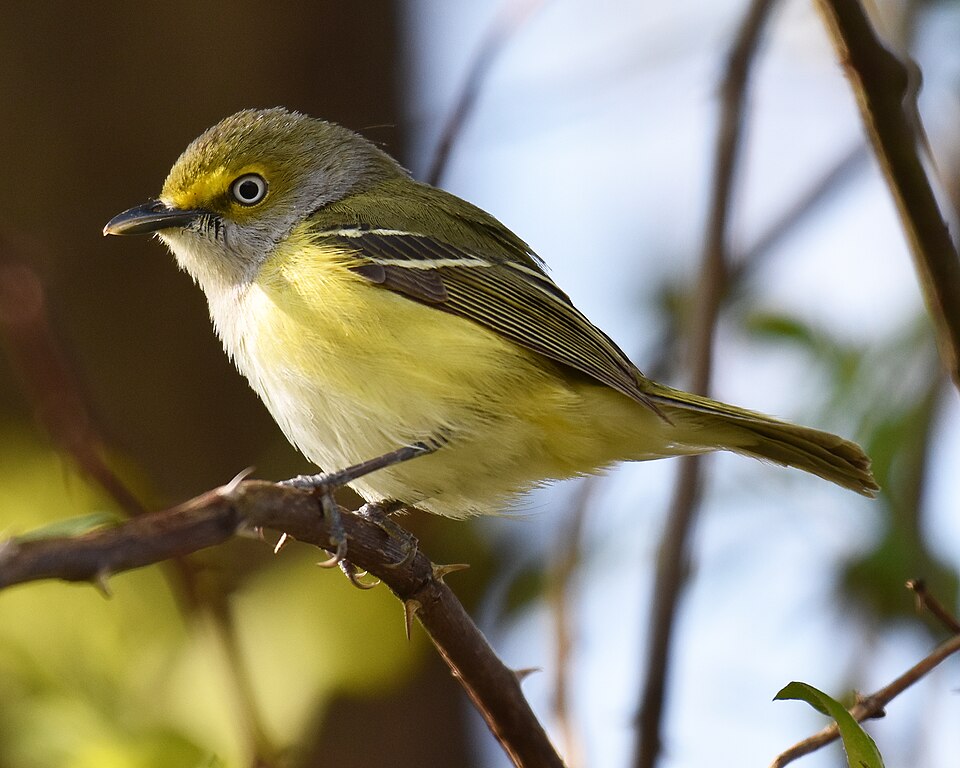
The Yellow-green Vireo is easily identifiable by its striking yellow-green plumage, which sets it apart from other vireos. Adult birds exhibit bright yellow underparts contrasted with olive-green upperparts and a whitish throat. They possess a distinct, bold white supercilium above each eye, bordered by a darker line, which enhances their alert expression. Unlike some vireo species, the Yellow-green Vireo lacks wing bars, which helps distinguish it from relatives such as the Red-eyed Vireo.
Juveniles resemble adults but may have slightly duller plumage. The sexes appear similar, with no significant differences in coloration or size, which can make field identification challenging without close observation. In flight, the Yellow-green Vireo maintains a steady, direct path with rapid wingbeats, typical of vireos. When perching, it often remains still for extended periods, scanning its surroundings for prey.
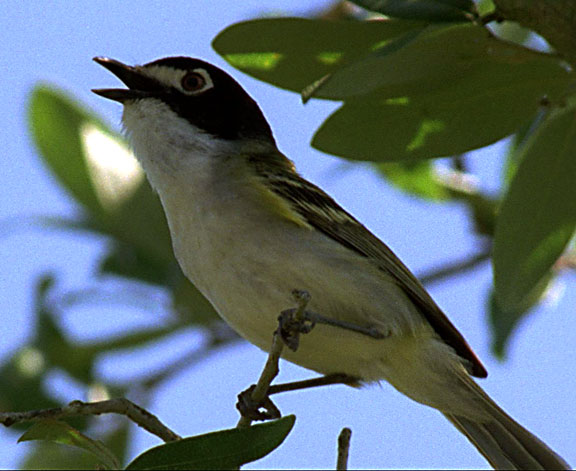
The Yellow-green Vireo's plumage can sometimes lead to confusion with the Philadelphia Vireo, especially during migration periods. However, the latter tends to have a more uniform yellow wash across its underparts and lacks the pronounced white supercilium of the Yellow-green Vireo. Observing the habitat and behavior, alongside these subtle plumage differences, can aid in accurate identification.
Having trouble telling birds apart? Upload a photo to our bird identification tool for an instant species match.
Yellow-green Vireo Habitat and Range
Preferred Habitat
The Yellow-green Vireo thrives in a variety of forested habitats, ranging from dense tropical rainforests to open woodlands and riparian zones. In its breeding range, it prefers deciduous forests and mixed woodlands, particularly those with a rich understory and ample canopy cover. This bird is often found at elevations from sea level up to 1500 meters, depending on the available forest type.
During migration and in wintering areas, the Yellow-green Vireo can be found in more diverse habitats, such as secondary growth forests and even plantations. It adapts well to different environments as long as there is sufficient tree cover and food resources. Unlike some species, the Yellow-green Vireo does not typically venture into urban areas, preferring the relative seclusion and safety of forested regions.
Seasonal habitat shifts are common for this migratory songbird. While breeding in the northern regions, it utilizes mature forests with dense foliage. In contrast, during its winter migration, it can be found in a wider range of wooded habitats, reflecting its adaptability and resilience.
Geographic Range
The Yellow-green Vireo breeds in southern Texas and extends its range through Mexico, reaching as far south as Panama. Its breeding range is relatively limited compared to some other vireos, but within this area, it is known for its adaptability and increasing presence.
During the non-breeding season, the bird migrates southward to its wintering grounds in the lowland forests of Central America and northern South America. Countries such as Colombia, Venezuela, and Ecuador host these birds during the northern winter months. The migratory corridors used by the Yellow-green Vireo are of particular interest to ornithologists, as they provide insights into the connectivity between breeding and wintering populations.
Population density hotspots include the Yucatan Peninsula, where many individuals gather before crossing the Gulf of Mexico. In these regions, the Yellow-green Vireo is often found in higher densities, particularly during migration periods. Its presence in these areas is a testament to its successful adaptation to a variety of forested environments.
Want to know which birds visit your area? Browse our backyard birds by location guides for region-specific species lists.
What Does the Yellow-green Vireo Eat?
The diet of the Yellow-green Vireo primarily consists of insects and other small invertebrates, which it forages for among the foliage of trees. This insectivorous diet includes caterpillars, beetles, and spiders, making the vireo an important natural pest controller in its habitat.
During the breeding season, the Yellow-green Vireo's diet remains largely consistent, but it may also consume small quantities of berries and fruit, particularly when insect prey is less abundant. In the winter months, the bird's diet shifts slightly to incorporate more fruit, reflecting the seasonal availability of food resources in its wintering grounds.
Foraging techniques involve gleaning insects from leaves and branches, often hanging upside down or fluttering briefly to reach prey. The vireo's ability to exploit different foraging strategies and dietary components allows it to thrive across a range of habitats and seasons. Its feeding schedule is diurnal, with peak activity occurring in the early morning and late afternoon when insects are most active.
Yellow-green Vireo Behavior and Social Structure
The Yellow-green Vireo, like many vireos, exhibits solitary or paired behavior during the breeding season. Territorial in nature, males sing energetically to defend their chosen area from rivals and attract mates. This territoriality is most pronounced in the early part of the breeding season, coinciding with courtship and nest building.
Courtship displays involve singing and short flights around the female, often accompanied by soft calls. Once a pair forms, both partners participate in nest building and rearing young. Outside of the breeding season, the Yellow-green Vireo becomes more social, often joining mixed-species flocks during migration. This flocking behavior provides increased vigilance against predators and enhances foraging efficiency.
The vireo's daily activity pattern includes periods of intense foraging interspersed with rest and preening. Its response to predators includes remaining motionless or retreating into dense foliage. Alarm calls are used to alert other birds of potential threats, helping maintain community vigilance. The Yellow-green Vireo's adaptability in social and foraging behavior ensures its survival across diverse environments.
Yellow-green Vireo Nesting and Reproduction
The Yellow-green Vireo constructs a cup-shaped nest, typically suspended from a horizontal fork of a tree branch. Nest materials include grasses, plant fibers, and spider silk, creating a sturdy yet flexible structure that can withstand wind and rain.
Nesting sites are often selected in deciduous or mixed forests, with a preference for locations that offer good concealment from predators. The clutch usually consists of 2 to 4 eggs, which are white with sparse dark spots. Both parents share incubation duties, which last approximately 12 to 14 days.
After hatching, the young remain in the nest for about 11 to 13 days before fledging. During this period, both parents are actively involved in feeding and protecting the nestlings. Typically, the Yellow-green Vireo raises one brood per year, although in optimal conditions, a second brood may be attempted. Parental care continues for a short period after fledging as the young learn to forage and become independent.
Yellow-green Vireo Sounds and Vocalizations
The Yellow-green Vireo's primary song consists of a series of clear, repetitive phrases, often described as a series of 'chewee' or 'chwee' sounds. This song is delivered boldly from exposed perches and serves as both a territorial and mating call.
Call notes are shorter and less melodious, often used for communication between mates or within flocks. Alarm calls are sharper and more abrupt, designed to alert other birds to potential threats. During the dawn chorus, the Yellow-green Vireo's song is particularly prominent, contributing to the rich tapestry of morning bird sounds in its habitat.
The song quality is somewhat reminiscent of the Red-eyed Vireo, but slower and with a more deliberate rhythm. These vocalizations play a crucial role in maintaining territory and attracting mates, as well as signaling the presence of predators.
Interesting Facts About the Yellow-green Vireo
- 1The Yellow-green Vireo's song can last up to 20 seconds, making it one of the longest vireo songs.
- 2Unlike many birds, the Yellow-green Vireo often sings continuously throughout the day rather than just at dawn.
- 3Yellow-green Vireos have been observed to migrate over 2,000 miles from breeding to wintering grounds.
- 4The species was first described scientifically in 1844 by American ornithologist John Cassin.
- 5Yellow-green Vireos are known to hybridize occasionally with the Red-eyed Vireo in overlapping breeding ranges.
- 6Despite their bright coloration, Yellow-green Vireos are adept at remaining camouflaged among foliage.
- 7These vireos play a crucial role in controlling insect populations, helping maintain the health of their ecosystems.
Yellow-green Vireo Conservation Status
The Yellow-green Vireo is currently listed as Least Concern on the IUCN Red List, with its population considered stable overall. However, regional threats could impact this status, particularly habitat loss due to deforestation in both breeding and wintering areas. Conservation efforts focus on preserving forest habitats across its range, with particular attention to maintaining migration corridors. In Texas, where the species has seen a range expansion, local conservation efforts have focused on preserving critical breeding habitats in riparian zones. Historically, the Yellow-green Vireo's population dynamics have shown resilience, adapting to changes in land use and habitat availability. Continued monitoring is essential to ensure that any emerging threats, such as climate change or increased habitat fragmentation, are addressed in a timely manner.
Other Vireonidae Species


Birds Similar to the Yellow-green Vireo
These species are often confused with the Yellow-green Vireo due to similar appearance or overlapping range.


